


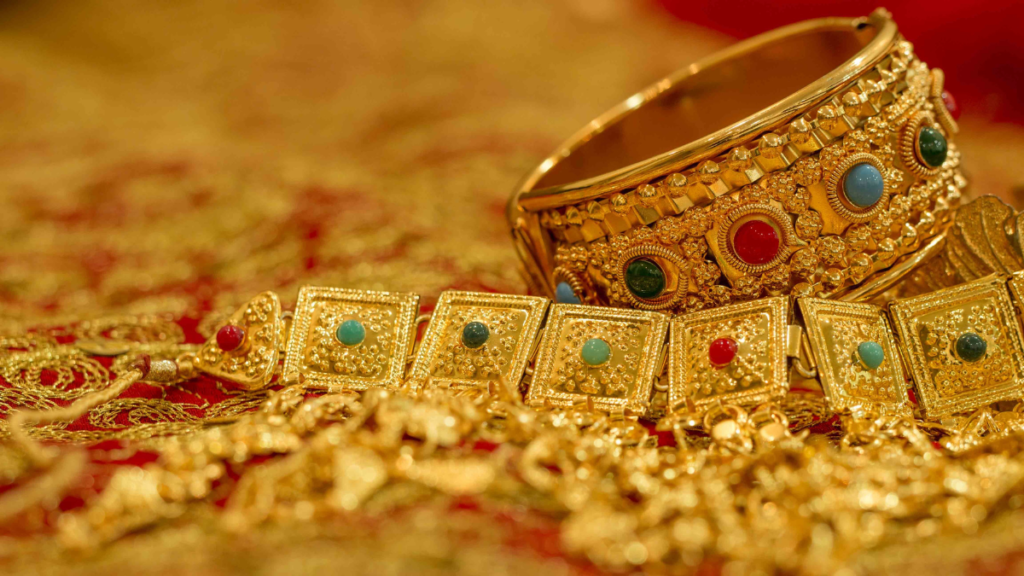
New lower-karat gold offering targets budget-conscious consumers as market dynamics reshape Dubai’s jewelry landscape
Dubai’s gold market, renowned globally as a premier destination for precious metal jewelry, has witnessed the introduction and growing popularity of 14-karat (14K) gold—a lower-purity option priced significantly below the traditional 22-karat and 24-karat products that have historically dominated the UAE market. As 14K gold establishes itself as the cheapest gold option available in Dubai, questions arise about which consumer segments stand to benefit most from this market evolution and how the lower-karat alternative is reshaping the Emirates’ centuries-old relationship with the precious metal.
The emergence of 14K gold reflects broader market dynamics including rising gold prices, evolving consumer preferences, demographic shifts, and competitive pressures that are transforming Dubai from exclusively a high-purity gold market into one offering diverse options spanning the quality and price spectrum.
Understanding Gold Purity: The Karat System
Before examining who benefits from 14K gold availability, understanding the karat system provides essential context:
Gold Purity Measurements
24-karat (24K) gold: 99.9% pure gold with virtually no other metals; soft, highly malleable, bright yellow color; traditionally used for investment-grade bars and coins rather than jewelry.
22-karat (22K) gold: 91.67% pure gold (22 parts gold, 2 parts other metals); traditional choice in the Gulf region, South Asia, and many Middle Eastern markets; relatively soft but suitable for intricate jewelry designs with cultural significance.
21-karat (21K) gold: 87.5% pure gold; popular in some regions as a compromise between purity and durability.
18-karat (18K) gold: 75% pure gold (18 parts gold, 6 parts other metals); international standard for fine jewelry; significantly harder than 22K, making it more durable for daily wear; common in European and American markets.
14-karat (14K) gold: 58.3% pure gold (14 parts gold, 10 parts other metals); substantially more affordable than higher karats; very durable due to higher alloy content; popular in Western markets; newest addition to Dubai’s traditional gold market.
Lower karats (10K, 9K): Legal minimum standards in some countries, but rare in the UAE market, where quality expectations remain high even for budget offerings.
The remaining content in lower-karat gold consists of alloy metals, including copper, silver, zinc, nickel, or palladium, that affect color (yellow, white, rose variations), durability, and price while reducing pure gold content.
Price Differentials: The Economic Appeal
The fundamental attraction of 14K gold lies in its significantly lower price compared to traditional higher-purity options:
Comparative Pricing Example
When international gold prices trade at approximately $2,650 per troy ounce (rates fluctuate constantly), approximate per-gram prices in UAE dirhams are:
24K gold: ~AED 315-320 per gram (depending on daily rates and seller markup)
22K gold: ~AED 290-295 per gram (traditional UAE standard)
18K gold: ~AED 235-240 per gram (international fine jewelry standard)
14K gold: ~AED 180-185 per gram (budget-friendly option)
Price differential: 14K gold costs approximately 40-45% less than 22K gold and nearly 45-50% less than 24K gold—dramatic savings that fundamentally change affordability calculations.
Jewelry Piece Cost Comparisons
The savings become more tangible when considering actual jewelry purchases:
Simple gold chain (10 grams):
- 22K: ~AED 2,900-2,950 plus making charges
- 14K: ~AED 1,800-1,850 plus making charges
- Savings: ~AED 1,000-1,100 (38-40%)
Wedding ring set (15 grams total):
- 22K: ~AED 4,350-4,425 plus making charges
- 14K: ~AED 2,700-2,775 plus making charges
- Savings: ~AED 1,650-1,650 (38-40%)
Elaborate necklace (25 grams):
- 22K: ~AED 7,250-7,375 plus making charges
- 14K: ~AED 4,500-4,625 plus making charges
- Savings: ~AED 2,750-2,750 (38-40%)
Note: Making charges (craftsmanship fees) apply to both karats and vary by design complexity, typically AED 15-80+ per gram. However, percentage-based calculations mean absolute dirham savings often favor higher-karat pieces despite similar percentage savings.
These substantial price differences create accessibility for consumers previously priced out of gold jewelry markets or enable purchases of larger, more elaborate pieces within existing budgets.
Consumer Segments Benefiting from 14K Gold
The availability of 14K gold in Dubai specifically advantages several distinct consumer demographics:
1. Budget-Conscious Residents and Young Professionals
Who they are: Entry-level professionals, young families, students, and residents earning modest salaries who desire gold jewelry but face budget constraints with traditional 22K options.
Why 14K benefits them:
- Affordability: Enables gold jewelry ownership on limited budgets
- Gift-giving: Makes gold gifts financially feasible for weddings, births, graduations, and celebrations where gold holds cultural significance
- Fashion jewelry: Allows following trends without substantial investment
- First purchases: Provides an entry point into gold jewelry ownership
- Peer parity: Maintains social and cultural participation in gift-giving traditions despite financial limitations
Example scenario: A young professional earning AED 6,000-8,000 monthly can purchase a 14K gold chain or bracelet for AED 1,500-2,500 versus AED 3,000-4,500 for an equivalent 22K piece—difference between an affordable occasional purchase and financial strain.
Market impact: This segment represents a growing portion of the UAE’s demographic, particularly among expatriate communities and younger Emiratis early in their careers.
2. Western Expatriates and Tourists
Who they are: European, American, Australian, and other Western expatriates and tourists accustomed to 14K and 18K gold standards in their home markets, where 22K is rare and often perceived as “too soft” or “too yellow.”
Why 14K benefits them:
- Cultural familiarity: Matches quality expectations from home countries
- Durability preferences: Higher alloy content creates harder jewelry, better suited to active lifestyles and daily wear
- Color expectations: Alloys can create a lighter yellow or white gold shade,s some prefer over 22K’s rich yellow color
- Budget optimization: Visiting tourists maximize purchasing power with lower per-gram prices
- Gifting from Dubai: Enables bringing substantial gold gifts from “Gold City” without excessive spending
Example scenario: European tourist visiting Dubai during holiday can purchase 14K jewelry at prices below, even discounted 18K in their home country, while obtaining “Dubai gold” with its quality reputation—compelling value proposition.
Market impact: Dubai attracts ~17 million international tourists annually, with Western visitors representing a significant segment with distinct gold preferences; 14K availability better serves these expectations.
3. Parents Shopping for Children and Teens
Who they are: Parents purchasing jewelry for children’s occasions—birthdays, graduations, religious milestones, or fashion accessories—where loss or damage risks make expensive investments impractical.
Why 14K benefits them:
- Risk mitigation: Lower financial stakes if jewelry is lost, damaged, or outgrown
- Larger pieces possible: Budget constraints loosened, enabling chunkier, trendier designs that children prefer
- Multiple children: Parents with several children can provide equitable gifts without excessive spending
- Growing children: Temporary jewelry for children who will grow and require different sizes reduces investment requirements
- School and play wear: Durability of 14K suits active children’s lifestyles better than softer 22K
Example scenario: Parent purchasing graduation gifts for three children can afford meaningful 14K pieces (totaling AED 4,500-6,000) versus a single 22K piece at a similar price, ensuring all children receive comparable recognition.
Market impact: UAE’s family-oriented culture and celebration of children’s milestones creates a substantial market for age-appropriate jewelry where 14K’s price-durability combination excels.
4. Daily-Wear Jewelry Consumers
Who they are: Consumers seeking practical jewelry for everyday wear—simple chains, bracelets, rings worn constantly—where durability and practicality outweigh investment value.
Why 14K benefits them:
- Superior durability: Higher hardness from increased alloy content resists scratching, denting, and deformation better than 22K
- Active lifestyle compatibility: Suitable for physical work, sports, or active lifestyles where 22K might damage
- Lower anxiety: Less worry about damage or loss of a moderately-priced piece versus a valuable 22K investment
- Practical luxury: Maintains a gold aesthetic and quality feel without excessive investment in utilitarian pieces
- Complementary to investments: Can own 22K/24K for investment and occasions, while wearing an affordable 14K daily
Example scenario: Fitness enthusiast wanting a simple gold chain for daily wear, including gym visits, chooses durable 14K at AED 1,500 over delicate 22K at AED 2,800 that might be damaged or require removal during activities.
Market impact: Modern UAE lifestyles are increasingly active and casual compared to previous generations; the practical jewelry market segment expands as younger demographics adopt different usage patterns than traditional investment-focused approaches.
5. Fashion-Forward Consumers
Who they are: Style-conscious individuals prioritizing trendy designs, contemporary aesthetics, and fashion statement pieces over traditional investment value or cultural conventions.
Why 14K benefits them:
- Trend affordability: Can purchase current fashion trends without major investment, replacing pieces as styles evolve
- Design focus: Budget flexibility enables prioritizing intricate designs, gemstone accents, or branded pieces where gold content is secondary
- Multiple pieces: Can own a diverse jewelry wardrobe—different styles for various occasions and outfits—within a reasonable budget
- Lighter colors: 14K white gold or rose gold variations are often more affordable and fashion-forward than traditional yellow 22K
- Statement jewelry: Larger, bolder pieces are financially feasible in 14K versus prohibitively expensive in 22K
Example scenario: Fashion-conscious professional can own 3-4 different 14K pieces for various occasions (work, evening, casual) at AED 6,000-7,000 total versus a single versatile 22K piece at a similar price—variety enhancing personal style expression.
Market impact: UAE’s cosmopolitan culture and social media influence drive fashion jewelry trends; 14K availability serves this growing segment, previously underserved by traditional high-karat market.
6. Gift-Givers for Social and Professional Occasions
Who they are: Individuals purchasing gold gifts for weddings, newborns, housewarmings, corporate gifts, or appreciation tokens where gesture matters but excessive expenditure is inappropriate or impossible.
Why 14K benefits them:
- Expanded gifting capacity: Can provide gold gifts to more recipients within budget constraints
- Appropriate value: 14K price point suits occasions where a generous gift is desired without excessive opulence
- Cultural fulfillment: Maintains gold gifting traditions central to Gulf and South Asian cultures despite economic constraints
- Corporate gifting: Businesses can afford employee recognition gold gifts in 14K that would be prohibitive in 22K
- Bulk purchases: Wedding planners or event organizers can secure multiple gold tokens at an accessible total cost
Example scenario: A Wedding guest can gift a 14K bracelet at AED 1,800-2,200 versus being unable to afford an appropriate 22K gift at AED 3,500-4,000, enabling cultural participation without financial hardship.
Market impact: UAE’s multicultural population celebrates diverse occasions with gift-giving expectations; affordable gold options enable broader participation in cultural traditions.
7. Investors Seeking Liquidity Balance
Who they are: Gold investors maintaining portfolios but desiring wearable pieces offering some liquidity while serving ornamental purposes—balancing investment and utility.
Why 14K benefits them (strategically):
- Portfolio diversification: Adds wearable component to pure investment holdings (24K bars, coins)
- Partial liquidation: Can sell or pledge 14K pieces if needed without touching primary 22K/24K investment holdings
- Utility value: Extracts practical use from gold holdings versus vault storage of pure investment pieces
- Lower opportunity cost: Capital deployed in an affordable 14K leaves more funds available for higher-return investments
- Gift-ready inventory: Maintains gold pieces suitable for gifts or occasions without impacting the core investment portfolio
Example scenario: Gold investor with 500 grams in 24K bars adds 50 grams in wearable 14K jewelry, providing functional use while preserving bulk holdings for investment purposes—total portfolio value similar with enhanced utility.
Market impact: Sophisticated investors increasingly view gold portfolios holistically, balancing pure investment with practical utility; 14K enables this balance cost-effectively.
Who Benefits LESS from 14K Gold
Conversely, certain consumer segments find less advantage in 14K options:
Traditional investors: Those purchasing gold purely for wealth preservation prefer maximum purity (22K/24K), where price-per-gram most closely tracks international gold prices, making lower-karat options unattractive.
Cultural conservatives: Consumers from backgrounds where 22K represents a quality standard may perceive 14K as inferior or inappropriate for significant occasions like weddings or religious celebrations.
Resale-focused buyers: Since gold jewelry resale value primarily reflects pure gold content, 14K pieces are worth ~58% of equivalent-weight 22K pieces, creating a disadvantage for those prioritizing eventual resale.
Status-conscious consumers: Individuals for whom gold jewelry signals wealth or social status may find 14K’s lower purity conflicts with display objectives.
Generational preferences: Older demographics, particularly in Gulf and South Asian communities, often maintain strong preferences for traditional 22K, viewing innovation with skepticism.
Market Dynamics Driving 14K Adoption
Several factors beyond consumer segments explain 14K gold’s emergence and growth:
Record Gold Prices
International gold prices reaching historic highs throughout 2024-2025 created affordability crisis for traditional gold consumers:
- Prices exceeding $2,600-2,700 per troy ounce place 22K jewelry beyond many budgets
- Affordability pressures particularly acute for expatriate communities facing cost-of-living increases
- 14K provides pressure-relief valve maintaining market accessibility despite elevated prices
Retail Competition
Dubai’s intense gold retail competition drives innovation:
- Hundreds of retailers in Gold Souq, Dubai Mall, and across Emirates compete fiercely
- Differentiation through product range, including lower-karat options, attracts new customer segments
- International chains entering Dubai market bring 14K/18K heritage from home markets
- Price-conscious consumers increasingly comparing across karats seeking value
Demographic Evolution
UAE’s changing population composition affects market preferences:
- Growing younger demographic (millennials, Gen Z) with different values than older generations
- Increasing Western expatriate population familiar with lower-karat standards
- Rising educational levels correlating with informed purchasing analyzing value propositions
- Cosmopolitan tastes blending international preferences with traditional local standards
Consumer Education
Improved information access enables sophisticated decisions:
- Online resources educating consumers about karat differences, pricing, and trade-offs
- Social media sharing experiences and recommendations across communities
- Transparency around gold pricing and purity creating informed market participants
- Reduced information asymmetry between sellers and buyers
Regulatory Confidence
Robust UAE regulatory frameworks ensure quality:
- Strict hallmarking requirements guarantee stated purity regardless of karat level
- Consumer protection laws providing recourse against misrepresentation
- Industry reputation incentivizing compliance with quality standards
- Confidence that 14K jewelry is genuine 14K, not lower purity misrepresented
Cultural and Traditional Considerations
14K adoption navigates complex cultural terrain:
Traditional Resistance
22K as standard: Generations in Gulf and South Asian cultures consider 22K the minimum acceptable quality for significant occasions.
Cultural meaning: Gold purity carries symbolic weight representing quality of relationship, respect for recipient, and family status.
Investment tradition: Gold jewelry historically served dual purpose—ornament and wealth storage—favoring higher purity.
Elders’ preferences: Family elders, particularly in gift-receiving roles, may express disappointment with lower-karat gifts.
Wedding customs: Bridal gold traditionally 22K as symbol of substantial family investment in new couple.
Evolving Acceptance
Practical recognition: Younger generations increasingly appreciate 14K’s practical advantages for daily wear and fashion jewelry.
Financial realism: Economic pressures create openness to affordable alternatives without abandoning gold entirely.
Lifestyle alignment: Active, casual modern lifestyles suit durable 14K better than delicate 22K.
Occasional differentiation: Emerging norm: 22K for special occasions/investments, 14K for daily wear/fashion—complementary rather than competing.
Western cultural influence: Globalization and cultural exchange gradually shifting rigid purity preferences.
Retailer and Industry Perspectives
Gold retailers view 14K through commercial lens:
Advantages for Retailers
Market expansion: Access to price-sensitive segments previously unable to participate significantly.
Differentiation: Product range including 14K distinguishes progressive retailers from traditional competitors.
Volume potential: Lower price points enable higher transaction volumes offsetting smaller per-unit margins.
International appeal: Better serving tourist and expatriate markets with familiar quality standards.
Fashion inventory: 14K economics enable carrying trend-focused inventory with acceptable obsolescence risk.
Operational Considerations
Inventory complexity: Managing multiple purities increases stock-keeping complexity.
Education requirements: Staff must explain purity differences, trade-offs, and appropriate uses to diverse customers.
Cultural sensitivity: Presenting 14K without implying traditional 22K is obsolete or inferior.
Margin structures: Lower absolute margins per gram require higher volumes for profitability.
Mixing inventory: Physical separation and clear labeling preventing accidental mixing of karats.
Investment Value Considerations
14K gold’s investment characteristics differ significantly from higher purities:
Resale Value
Pure gold content: 14K jewelry’s resale value reflects ~58% gold content—a 10-gram 14K piece contains ~5.8 grams pure gold.
Making charge loss: Reselling jewelry typically recovers only gold value, not making charges, proportionally affecting all karats but representing larger percentage loss for elaborate 14K pieces.
Market liquidity: While 22K finds ready buyers in UAE market, 14K may have smaller resale market locally (though international markets more receptive).
Buy-back policies: Some retailers offer buy-back programs, though terms vary by karat and may be less favorable for 14K.
Wealth Preservation
Investment unsuitability: 14K jewelry serves poorly as pure wealth preservation vehicle compared to high-purity alternatives.
Utility value: However, 14K provides value through USE rather than pure investment—different purpose justifying purchase.
Complementary roles: Financial advisors might suggest: investment gold (24K bars/coins), traditional jewelry (22K), practical jewelry (14K)—each serving distinct purpose.
Inflation hedge: All gold jewelry provides some inflation protection, though higher-purity options more directly track gold price appreciation.
Consumer Decision Framework
For consumers evaluating whether 14K gold suits their needs:
Choose 14K Gold If:
- Primary goal is wearable jewelry for fashion, daily wear, or practical use
- Budget constraints make 22K prohibitively expensive for desired pieces
- Durability is priority due to active lifestyle or rough use conditions
- Purchasing for children, teens, or occasions where loss/damage risk is high
- Fashion trends and style variety matter more than investment value
- Comfortable with lower purity for non-traditional/non-significant occasions
- Cultural background accepts or prefers 14K/18K standards
Choose 22K Gold If:
- Purchase serves investment purpose or wealth preservation
- Traditional occasion (wedding, major religious milestone) where cultural expectations favor high purity
- Gift for recipients (particularly elders) expecting traditional quality standards
- Resale value and liquidity are important considerations
- Prefer rich yellow color and prestige associated with high-purity gold
- Budget accommodates higher price for smaller piece rather than larger 14K piece
- Long-term heirloom piece passing through generations
Hybrid Approach:
Many consumers increasingly adopt mixed strategies:
- 22K/24K for investments and major occasions
- 14K for daily wear, fashion jewelry, children’s pieces, and practical items
- Balanced portfolio approach optimizing for different purposes
Future Outlook: 14K Market Evolution
The 14K gold segment in UAE likely to continue evolving:
Growing acceptance: As more consumers experience 14K quality and value, adoption likely accelerates, particularly among younger demographics.
Retailer expansion: More retailers adding 14K options as market validates demand and competitive pressures intensify.
Design innovation: Dedicated 14K design lines optimizing for this segment’s preferences rather than simply offering 22K designs in 14K.
Marketing sophistication: Targeted marketing communicating 14K benefits to appropriate segments rather than generic promotion.
Cultural integration: Gradual acceptance of 14K for appropriate occasions within cultural frameworks while maintaining 22K for traditional purposes.
Lower-karat exploration: Potential introduction of 10K (common in some Western markets) for ultra-budget segments, though cultural acceptance uncertain.
Regulatory clarity: Potential government guidance ensuring consumer protection while enabling market innovation.