Tag: Saudi Arabia

Stay informed about Saudi Arabia with Gulf Insight 360. Get the latest news, analysis, and insights on the kingdom’s politics, economy, culture, and social trends. Visit www.gulfinsight360.com for concise and reliable coverage of Saudi Arabia’s dynamic landscape.

  • Saudi Arabian Airport Surpasses Neighboring Country and May Accommodate Multiple Indian Cities

    Saudi Arabian Airport Surpasses Neighboring Country and May Accommodate Multiple Indian Cities

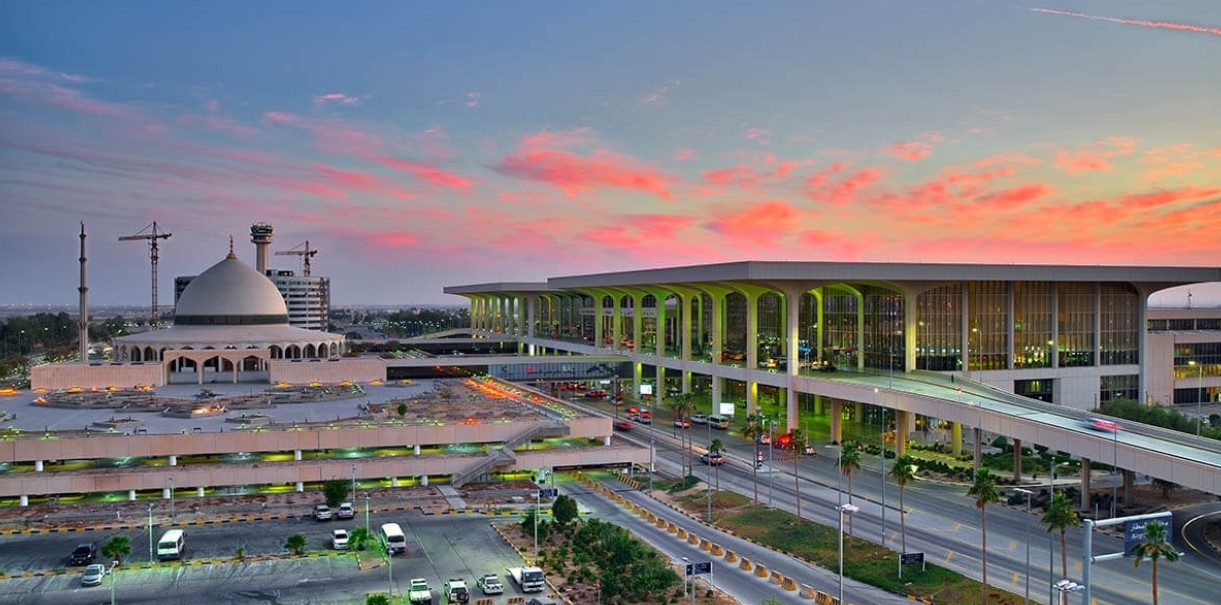
    The King Fahd International Airport in Saudi Arabia holds the prestigious title of being the largest airport in the world, as recognized by the Guinness Book of World Records. With a vast area spanning approximately 780 square kilometers, this airport is even larger than the neighboring country of Bahrain. In fact, it is so massive that it has the capacity to accommodate at least 3-4 small Indian cities, with each city typically covering an area of 121 square kilometers.

    The development of this colossal airport began in 1983 and took over one-and-a-half decades to complete. It finally became operational in 1999, serving as a crucial airbase for the US military during the Gulf War. Since then, it has been managed by the Dammam Airports Company (DACO), which took over its corporatization in July 2017.

    According to information provided by DACO, the King Fahd International Airport facilitates the travel of over 10 million passengers annually. This impressive figure solidifies its position as one of the busiest airports in terms of passenger footfall. With 37 airlines operating flights from this airport, it provides connectivity to a staggering 43 destinations.

    Despite the high volume of airlines and passengers, the airport has managed to maintain an impressive record of operating flights on time. In fact, it was ranked as the second-best airport in terms of punctuality in 2019. The airport boasts three massive terminal buildings, which house a wide range of amenities such as lounges, restaurants, cafes, and prayer rooms, ensuring a comfortable and convenient experience for travelers.

    The significance of the King Fahd International Airport goes beyond its massive size and functionality. It serves as a symbol of the exponential growth the aviation industry has witnessed globally over the past few decades. Air travel has become increasingly popular, resulting in a surge in the number of passengers embarking on flights worldwide.

    The construction of airports like King Fahd International Airport is a response to this growing demand. These airports act as vital gateways connecting countries and continents, facilitating commerce, tourism, and cultural exchange. They play a crucial role in promoting international connectivity and forging strong global relationships.

    In the case of the King Fahd International Airport, its sprawling size ensures that it has the capacity to handle a significant number of flights and passengers. Its strategic location in the Eastern Province of Saudi Arabia has further contributed to its importance as a major hub in the region. Its proximity to Bahrain and its efficiency in managing flights make it an attractive choice for airlines and travelers alike.

    As air travel continues to increase in popularity, airports like King Fahd International will play a vital role in supporting this growth. Constant renovations, expansions, and upgrades will be necessary to meet the evolving needs of the industry and provide passengers with exceptional experiences.

    In conclusion, the King Fahd International Airport stands as a remarkable testament to human engineering and ambition. Its vast size, ability to accommodate numerous passengers and flights, and its strategic location all contribute to its status as the largest airport in the world. It represents the significant role airports play in connecting people and countries, fostering global relationships, and driving economic growth. With its impressive facilities and track record, this airport is set to continue serving as a crucial gateway for air travel in the region and beyond.

  • How the Infrastructure Projects Center Turns Riyadh into an Attractive Hub for International Companies

    How the Infrastructure Projects Center Turns Riyadh into an Attractive Hub for International Companies

    RIYADH — The decision of the Saudi Council of Ministers on Tuesday to establish a specialized center for upgrading infrastructure projects in the Riyadh region enhances the city’s competitiveness and makes it a destination for international companies with major investment flows, according to senior officials and experts.

    Crown Prince and Prime Minister and Chairman of the Royal Commission for Riyadh City (RCRC) Prince Mohammed bin Salman announced in January 2021 that a strategy is being prepared to make Riyadh one of the 10 largest economies in the world.

    Mayor of the Riyadh Region Prince Faisal bin Ayyaf said that the center contributes to organizing the work of various projects in the Saudi capital, in a way that guarantees raising the quality of business, preserving the infrastructure, and keeping pace with the major developmental renaissance that Riyadh is currently witnessing.

    Prominent economist Khaled Al-Jasser, head of the Amakin International Group, highlighted the importance of the proposed center in improving the infrastructure projects in Riyadh to align with the Kingdom’s plans to become a regional commercial destination. He said the capital city is a destination for international companies with huge investment flows.

    Al-Jasser said that Riyadh has recently witnessed the opening of several regional headquarters for international companies. “This shows the confidence enjoyed by the Saudi economy at the international level, and Riyadh would be the largest and most attractive destination for investments in the region,” he said.

    Al-Jasser pointed out that Saudi Arabia has worked to consolidate economic cooperation with various countries by stimulating the government and private sectors and continuing the exchange of visits between business leaders. “Hence, the establishment of the center comes as a practical application of an economic vision in diversifying sources of income, in addition to achieving the Riyadh strategy and strengthening the country’s position as an international investment destination.

    He said that the new decision of the Council of Ministers reflects the efforts aimed at implementing the Kingdom’s priorities, in addition to providing thousands of job opportunities and strengthening the foreign investment market, which will benefit from the establishment of the new center.

    For his part, the real estate expert Khaled Al-Mubayed, CEO of Monassat Real Estate Company, said that the center provides a unified operating model for organizing business and improving the quality of its implementation. “The goals of the center keep pace with Riyadh’s status and its prosperous future that achieves the government’s aspirations and quality of life goals according to Vision 2030,” he pointed out.

    According to Al-Mubayed, predictions point to major future projects in the Saudi capital, so that it would become one of the largest economies of cities in the world, which enhances economic growth and urban renaissance in the city.

    In an important development, the Saudi Council of Ministers announced its decision on Tuesday to establish a specialized center for upgrading infrastructure projects in the Riyadh region. This decision is expected to enhance the competitiveness of the city and make it a lucrative destination for international companies with significant investment flows. Experts and senior officials have welcomed this decision and believe that it will have a positive impact on Riyadh’s economic growth.

    Prince Mohammed bin Salman, the Crown Prince, Prime Minister, and Chairman of the Royal Commission for Riyadh City (RCRC), had previously announced in January 2021 that a strategy was being developed to make Riyadh one of the world’s top 10 economies. The establishment of this specialized center aligns with this ambitious goal and reflects the determination to transform Riyadh into a regional commercial hub.

    Prince Faisal bin Ayyaf, the Mayor of the Riyadh Region, emphasized the importance of this center in organizing various projects in the Saudi capital. He stated that it will raise the quality of businesses, preserve the infrastructure, and support the ongoing developmental renaissance that Riyadh is currently witnessing. This center will play a crucial role in streamlining project management and ensuring optimal efficiency.

    Renowned economist Khaled Al-Jasser, the head of the Amakin International Group, stressed the significance of improving infrastructure projects in Riyadh to attract international companies and stimulate foreign investment. He highlighted the recent establishment of regional headquarters for international companies in Riyadh, which demonstrates confidence in the Saudi economy and solidifies the city’s position as an attractive investment destination. Al-Jasser believes that Riyadh has the potential to become the largest investment destination in the region.

    Saudi Arabia has actively pursued economic cooperation with various nations, fostering both government and private sector collaboration. Through frequent exchanges of visits between business leaders, the country has sought to diversify its sources of income and strengthen its position as an international investment destination. The establishment of this specialized center is a practical application of the economic vision, supporting the goals of economic diversification and the overall Riyadh strategy.

    This decision is expected to create thousands of job opportunities and contribute to the growth of the foreign investment market. It aligns with the Kingdom’s priorities for economic development and showcases its commitment to creating a favorable business environment. The new center will enhance coordination and collaboration between the public and private sectors, leading to the efficient implementation of infrastructure projects.

    Khaled Al-Mubayed, the CEO of Monassat Real Estate Company and a real estate expert, highlighted the center’s role in organizing businesses and improving their implementation. He believes that the center’s goals are in line with Riyadh’s status as a rapidly developing city, aimed at achieving the aspirations outlined in Vision 2030 related to improving the quality of life and economic growth. Al-Mubayed predicts major future projects in Riyadh, positioning the city as one of the largest economies globally, further contributing to urban development and economic progress.

    In conclusion, the establishment of a specialized center for upgrading infrastructure projects in the Riyadh region is a significant step towards realizing Riyadh’s ambition of becoming one of the world’s top economies. This decision has been applauded by experts and officials, who recognize the positive impact it will have on the city’s competitiveness and its attractiveness to international companies. The center will play a pivotal role in organizing projects, improving their quality, and aiding the ongoing developmental renaissance. It will also create job opportunities, strengthen the foreign investment market, and consolidate Riyadh’s position as an international investment destination. With its ambitious goals and dedication to economic growth and urban development, Riyadh is set to become a key player in the global economy.

    Read More  NHC’s cutting-edge integrated living project in Jeddah

  • Israeli-Saudi Security Cooperation: A Potential Nightmare for Iran

    Israeli-Saudi Security Cooperation: A Potential Nightmare for Iran

    Despite the lack of a formal normalization event between Israel and Saudi Arabia, the countries have a shared interest and desire in developing defense cooperation, including the joint detection of Iranian aerial threats with American assistance, observers in Israel and the United States say.

    Earlier this month, the head of United States Air Forces Central, which is the air component of the U.S. Central Command (CENTCOM) in the Middle East, Lt. Gen. Alexus Grynkewich, told The Jerusalem Post that the U.S. is working on creating a digital connection between Israel and Gulf Arab states that can be used to issue alerts over fast-moving threats such as cruise and ballistic missiles.

    Tehran’s worst day

    Bradley Bowman, senior director of the Center on Military and Political Power at the Washington-based Foundation for Defense of Democracies, and former national security adviser to members of the Senate Armed Services and Foreign Relations committees, told JNS that the establishment of an Israeli-Gulf-U.S. defense architecture in the region would be a “nightmare scenario for Tehran.”

    “As far as I can tell, Israel and Saudi Arabia are already engaging in some level of security cooperation below the radar, but they have just barely begun to tap into the potential.” Bowman, a former Black Hawk helicopter pilot and assistant professor at the West Point military academy, stated.

    “If normalization between Riyadh and Jerusalem occurs, this security cooperation can go to a whole other level and that would serve the interests of Washington, Riyadh, and Jerusalem.”

    Iran, for its part, wants to keep its adversaries “weak and divided,” said Bowman, and that means trying to counter any movement towards a combined American-Arab-Israeli regional security architecture.

    “Tehran’s worst day would be when Gulf Cooperation Council countries, Israel, and the U.S. establish a combined regional security architecture that enables each country to more quickly detect and defeat threats emanating from Iran and its proxies,” said Bowman.

    He noted that senior American government officials traveled to Saudi Arabia in February for U.S.-Gulf Cooperation Council (GCC) Working Group meetings focusing on integrated air and missile defense, maritime security, Iran, and counterterrorism.

    “Step one is the understanding that Riyadh, Abu Dhabi, Manama, and Jerusalem confront a common threat. Most Arab leaders have known for a long time that Israel is not a threat. What is new, after the Abraham Accords, is some Arab governments are finally willing to say it publicly and act accordingly,” said Bowman. “It is widely understood that the Islamic Republic of Iran and its terror proxies are the real threat to regional security.”

    Bowman said that establishing a “single pane of glass,” meaning creating the technical means for each partner country to see a common threat picture, would make it more difficult for Iran to conduct drone and missile strikes.

    “One of the challenges is to create sufficient trust so that the participants are willing to share information with one another and potentially join common networks,” he said. “The U.S. military could ease and expedite this process by playing the role of aggregator and integrator, potentially serving as a central node in the effort to create some sort of common threat picture.

    “For those of us interested in deterring and defeating Iranian aggression, few things are more important than advancing a combined regional security architecture,” Bowman said. “If there is political will in each of the capitals, it is absolutely feasible.”

    No declarations of an “Arab-Israeli NATO”

    Professor Uzi Rabi, director of the Moshe Dayan Center for Middle Eastern and African Studies Studies at Tel Aviv University, said it is highly likely that Israel and Saudi Arabia would be interested in promoting such cooperation, but that Riyadh is also not interested in any public declarations of “an Arab-Israeli NATO. The Saudis don’t want reports like that floating around.”

    In addition, said Rabi, for the U.S., extending the Abraham Accords in this manner is a way of telling Saudi Arabia “that they’re not leaving the region, and that it’s wrong to assume that they are. In light of the fact that China brokered the Saudi-Iran [rapprochement] agreement, the U.S. is also conducting damage control.”

    According to Rabi, it is certainly reasonable to assume that the Saudis will be interested in developing such cooperation, but at this stage, under the radar and not publicly. As always with Saudi Arabia, the scope and depth of cooperation with Israel are based on the U.S. approach towards Saudi Arabia. This is the litmus test, and what Israel does is less important. The Palestinian issue is not decisive.

    What is decisive is how the U.S. responds to Saudi requests for a military umbrella, a civilian nuclear program, and the full known Saudi wish list.

    “This would be the required ‘payment.’ The more the Americans meet Saudi requests, the more the extension of the Abraham Accords grows,” said Rabi. “Hence, this is not a bilateral Israeli-Saudi platform. One must look at all of the table’s legs.”

    Rabi argued that even when normalization occurs, it likely won’t be full-scale, adding that the seeds of normalization are already evident. Relations with Israel are progressing “at the Saudi pace—it’s crawling,” he said. “[Crown Prince] Mohammed bin Salman is not yet king, and there are still issues with the U.S., hence normalization greatly depends on how attentive the U.S. is to Saudi Arabia,” he said.

    Rabi described the decision by Saudi Arabia to reestablish relations with Iran as “hedging and risk management. Of course, the Iranian regime is still a danger to the Saudis. The logic here is to keep your friends close and your enemies closer.”

    Despite a certain degree of improved Saudi-Iranian relations, which join existing trade between the United Arab Emirates and Iran, viewing these developments as a zero-sum game as far as Israel is concerned would be inaccurate, said Rabi.

    “This does not decrease the chances of normalization. It’s not an either-or situation, but one in which both things can happen. Twenty years ago, Iran would demand that the Gulf states disconnect ties with Israel, but today, they are in no position to do that. It’s an open game in the new Middle East,” he said.

  • Saudi Arabia in 2nd Quintet Meeting on Lebanon: Key Takeaways and Commitment to Stability

    Saudi Arabia in 2nd Quintet Meeting on Lebanon: Key Takeaways and Commitment to Stability

    Saudi Arabia’s active participation in the second Quintet Meeting Saudi Arabia in Doha, Qatar, highlights the Kingdom’s commitment to supporting Lebanon’s progress and stability. During the meeting, the countries discussed the urgency of implementing presidential elections and the need for economic and judicial reforms. They emphasized the importance of Lebanon’s sovereignty, independence, and adherence to international agreements. The Saudi delegation, led by Nizar Al-Aloula, discussed critical measures to overcome the political impasse and promote national unity. The meeting reaffirms the collaborative efforts of Saudi Arabia and other nations to address Lebanon’s challenges and pave the way for a brighter future.

    Introduction

    In the pursuit of regional stability and support for Lebanon’s progress, Saudi Arabia actively participated in the second Quintet Meeting on Lebanon, hosted in Doha, Qatar. Led by Nizar Al-Aloula, the advisor to the General Secretariat of the Council of Ministers, the Kingdom’s delegation joined representatives from Qatar, Egypt, USA, and France in discussing critical matters pertaining to Lebanon’s political and economic landscape.

    During the meeting, the participating nations emphasized the importance of implementing presidential elections, undertaking economic reforms, and preserving Lebanon’s sovereignty and independence. Judicial reforms and the investigation of the Beirut port explosion of 2020 were also key topics of discussion. This article sheds light on the key takeaways from Saudi Arabia’s involvement in the Quintet Meeting and its commitment to supporting Lebanon’s journey towards stability and prosperity.

    Saudi Arabia Urges Urgency for Implementing Presidential Elections

    One of the primary focal points of the second Quintet Meeting on Lebanon was the pressing need for the Lebanese government to expedite the process of implementing presidential elections. As Lebanon faces political challenges, the participating nations emphasized the significance of a stable leadership to steer the country towards progress and address its issues effectively. By prioritizing the establishment of a new presidential mandate, Lebanon can move forward with greater stability and focus on addressing its economic and societal challenges.

    Economic Reforms and Commitment to Lebanon’s People

    During the meeting, the countries in the Quintet underscored the importance of conducting several economic reforms in Lebanon to uplift its economy and improve the livelihoods of its citizens. The nations acknowledged the need to support Lebanon’s people through inclusive economic policies and initiatives that foster growth and prosperity. By taking concrete steps towards economic reforms, Lebanon can enhance its financial stability and pave the way for a brighter future for its citizens.

    Upholding Sovereignty and Independence

    Another significant aspect of the discussions in the Quintet Meeting was the reaffirmation of Lebanon’s sovereignty and independence. The participating nations emphasized the need to respect Lebanon’s territorial integrity and autonomy in making decisions that affect its internal affairs. Upholding Lebanon’s sovereignty is crucial in ensuring its progress and preventing external interference that may hamper its political stability and development.

    Addressing the Beirut Port Explosion

    The investigation of the devastating Beirut port explosion of 2020 was a critical point of discussion during the meeting. The participating nations stressed the importance of conducting a thorough and transparent investigation to hold those responsible accountable. By seeking justice for the victims of the explosion and understanding the causes behind the incident, Lebanon can take necessary measures to prevent similar tragedies in the future.

    Overcoming Political Impasse and Promoting National Unity

    The Quintet Meeting also emphasized the need for Lebanon’s leadership and political parties to take immediate action in overcoming the current political impasse. By fostering dialogue and cooperation, Lebanon can build a unified front to address its challenges and work towards a shared vision for its future. The meeting’s outcomes underscore the collaborative efforts of Saudi Arabia and other nations in supporting Lebanon’s political stability and promoting national unity

    Conclusion

    Saudi Arabia‘s active engagement in the second Quintet Meeting on Lebanon reflects the Kingdom’s commitment to supporting Lebanon’s progress and stability. The meeting, which brought together representatives from various nations, discussed critical topics, including implementing presidential elections, economic reforms, and preserving Lebanon’s sovereignty. By addressing the Beirut port explosion and promoting national unity, the participating nations demonstrated their dedication to helping Lebanon overcome its challenges and foster a brighter future. The Quintet Meeting reaffirms the collaborative efforts of Saudi Arabia and other nations to address Lebanon’s pressing issues and pave the way for a more stable and prosperous nation.

  • Cristiano Ronaldo Claims Saudi League ‘Outperforms’ MLS in Subtle Dig at Lionel Messi

    Cristiano Ronaldo Claims Saudi League ‘Outperforms’ MLS in Subtle Dig at Lionel Messi

    Cristiano Ronaldo, the Al Nassr forward, hails the Saudi Pro League as superior to MLS and rules out any European club return. His impact on Saudi football has attracted top players to the desert kingdom. As Ronaldo’s career takes a new turn, the Saudi league rises in prominence, becoming an alluring destination for global football stars.

    Introduction

    Cristiano Ronaldo, the legendary Portuguese forward and Al Nassr star, has taken a subtle dig at his great rival Lionel Messi, claiming that the Saudi Pro League stands superior to Major League Soccer (MLS). In a media interaction following Al Nassr’s preseason friendly defeat to Celta Vigo, Ronaldo expressed his conviction that the Saudi league has surpassed its American counterpart and emphasized that he has no intentions of returning to play for any European club.

    As Saudi Arabia emerges as an increasingly attractive destination for top-tier footballers, Ronaldo takes pride in his role in paving the way for others to follow suit, making the move to the desert kingdom. This article delves into Ronaldo’s opinions and the growing prominence of the Saudi league in the world of football.

    Cristiano Ronaldo’s Bold Assertion – Saudi League vs. MLS

    During the post-match press conference, Cristiano Ronaldo made a bold statement, asserting that the Saudi Pro League outperforms Major League Soccer. When asked about the possibility of a move to the United States like Lionel Messi, who recently joined Inter Miami, Ronaldo firmly expressed his preference for the Saudi league. He highlighted the increasing allure of Saudi Arabia for footballers worldwide, with more top players likely to make the switch in the coming year.

    Paving the Way – Cristiano Ronaldo’s Impact on Saudi Football

    Since Cristiano Ronaldo’s arrival at Al Nassr in December, the Saudi Pro League has witnessed an influx of high-profile players. Ronaldo proudly proclaimed that he opened the way for other football stars to sign with Saudi teams, which has indeed become evident with notable signings like Karim Benzema and N’Golo Kante joining champions Al-Ittihad. Ronaldo’s influence has been instrumental in elevating the league’s status and attracting talent from across the globe.

    Cristiano Ronaldo Shuns European Return, Praises Premier League

    With age catching up, Cristiano Ronaldo has unequivocally ruled out any potential return to European club football. The 38-year-old Portugal captain believes that European football has experienced a decline in quality, except for the English Premier League, which continues to thrive and outperform other leagues. Ronaldo’s departure from European football marks the end of an era, but his legacy and impact on the game remain enduring.

    Conclusion

    As Cristiano Ronaldo continues his football journey with Al Nassr in the Saudi Pro League, he has made his admiration for the league evident. By asserting its superiority over MLS and his refusal to return to European football, Ronaldo’s words underscore the growing appeal and competitiveness of the Saudi league. His presence has not only elevated the league’s profile but also paved the way for other renowned players to join the ranks of Saudi clubs.

    As the football landscape experiences a shift, Saudi Arabia emerges as a burgeoning destination, attracting some of the sport’s biggest names. With Ronaldo’s contributions, the Saudi Pro League cements its position as a compelling and competitive force in the world of football.

  • NHC Launches ‘Sadayem’: A Cutting-Edge Integrated Living Project in Jeddah

    NHC Launches ‘Sadayem’: A Cutting-Edge Integrated Living Project in Jeddah

    Sadayem: NHC’s cutting-edge integrated living project in Jeddah, blending Hijazi heritage and modernity. Boasting 8,000 luxurious residential units and strategic collaborations, it enhances Saudi Arabia’s real estate landscape.

    Introduction

    Saudi Arabia’s National Housing Company (NHC) introduces ‘Sadayem,’ an avant-garde integrated living project in the vibrant city of Jeddah. Spanning over 3.8 million square meters, this suburb boasts more than 8,000 residential units, including villas, apartments, and townhouses, offering a luxurious and comfortable living environment to over 40,000 residents. Drawing inspiration from the Hijazi region’s architectural heritage, ‘Sadayem’ exudes modernity while preserving the essence of the past. With strategic positioning near essential services and promising future developments, ‘Sadayem’ reflects NHC’s dedication to enhancing the real estate supply and contributing to the Housing Programme and Vision 2030. Let us delve into the intricacies of this cutting-edge project and its potential impact on the landscape of integrated living in Saudi Arabia.

    Let us delve into the intricacies of this cutting-edge project and its potential impact on the landscape of integrated living in Saudi Arabia. ‘Sadayem’ represents a remarkable fusion of contemporary living and traditional architectural elements, aiming to create an ideal community for its residents. As NHC officially inaugurates this grand venture, the project’s significance in bolstering the nation’s housing sector becomes increasingly apparent. With its innovative design, comprehensive amenities, and commitment to fostering a sense of community, ‘Sadayem’ sets a new standard for integrated living projects in the region.

    Embracing Hijazi Heritage: Architecture and Design

    ‘Sadayem’ celebrates the rich cultural legacy of the Hijazi region through its thoughtfully crafted architectural designs. Inspired by historical neighborhoods in Jeddah, the project incorporates long green pathways that extend over 8 kilometers, providing a pleasant and reminiscent experience. These pathways connect residents to essential services, green spaces, and a range of amenities, fostering a cohesive and modern community. The fusion of contemporary urban planning and Hijazi identity creates a harmonious living environment that sets ‘Sadayem’ apart as a distinctive residential haven.

    Unveiling the Inauguration and Collaboration of Sadayem

    The inauguration of ‘Sadayem’ witnessed the esteemed presence of Prince Saud bin Abdullah bin Jalawi, Governor of Jeddah, reaffirming the project’s significance in the city’s urban landscape. During the ceremony, NHC forged alliances with renowned developers, including Rattal Real Estate Development Company, Mayar for Development and Real Estate Investment Company, Dar and Emar for Real Estate Investment and Development Company, Mohamed Al Habib and Partners Company, Ajdan for Real Estate Development Company, Thabat Al Maskan Real Estate Company, and Ebar Al Mamlaka Real Estate Company. The collaboration marks a step towards empowering the private sector to lead future projects and elevate residential communities in Saudi Arabia.

    Path to Homeownership: The Sales Phase

    ‘Sadayem’ sets a new horizon for homeownership opportunities with its upcoming sale of properties. The first phase, commencing on July 24, features attractively priced villas starting at SR800,000 ($213,126). Future phases will introduce apartments and townhouses, catering to diverse preferences and needs. The project’s commitment to promoting homeownership rates among families aligns with Saudi Arabia’s overarching vision of providing quality living for its residents.

    Comprehensive Services and Financing Options

    Ensuring the well-being and convenience of ‘Sadayem’ residents, NHC has signed Memoranda of Understanding (MoUs) with prominent Saudi entities, including Al Habib Medical Group, Lejam Sports Company, Human Development Company, Sasco Vehicle Services, and Waad Holding. These collaborations guarantee comprehensive services and amenities within the suburb, enhancing the overall living experience. Moreover, cooperation agreements with Al-Ahli Bank, Al Bilad Bank, and Al Rajhi Bank offer special financing options, further facilitating the acquisition of homes in ‘Sadayem.’

    Conclusion

    The unveiling of ‘Sadayem’ by Saudi Arabia‘s National Housing Company heralds a new era of integrated living in Jeddah. Merging Hijazi heritage with modern design, the project exemplifies NHC’s commitment to creating luxurious and comfortable residential spaces. As ‘Sadayem’ embraces a diverse range of residents, its green pathways and access to essential services enhance the allure of this innovative suburb. With a strategic focus on promoting homeownership rates and empowering the private sector, ‘Sadayem’ aligns with Saudi Arabia’s visionary Housing Programme and Vision 2030. This groundbreaking project reflects NHC’s dedication to fostering prosperous communities and advancing the nation’s real estate landscape.