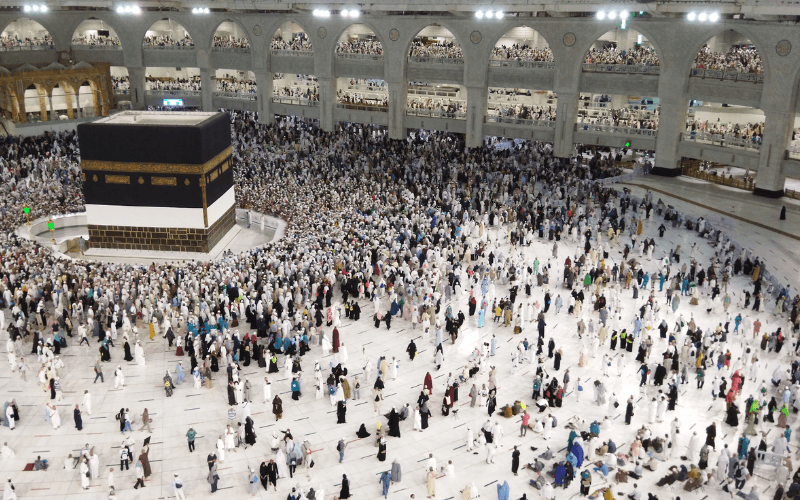
Saudi Arabia has officially opened Hajj 2026 registration for Muslims residing in minority-Muslim countries through the Nusuk digital platform, marking the beginning of the application process for what will be one of Islam’s most significant religious gatherings. The early launch provides prospective pilgrims ample time to prepare for the sacred journey scheduled for mid-2026.
Table of Contents
Digital Registration Through Nusuk Platform
The registration process is being conducted exclusively through the Nusuk platform (nusuk.sa), Saudi Arabia’s comprehensive digital ecosystem for religious tourism services. The platform represents the Kingdom’s commitment to modernizing and streamlining the Hajj experience while maintaining the spiritual essence of the pilgrimage.
Muslims living in countries where Islam is a minority religion can now submit applications, select service packages, and begin the documentation process through the user-friendly digital interface available in multiple languages. The system is designed to provide transparency, accessibility, and efficiency for pilgrims regardless of their location.
Who Can Register Now
The current registration phase specifically targets Muslims residing in Muslim-minority countries—nations where Muslims do not constitute the majority of the population. This category includes pilgrims from:
Europe and the Americas including the United States, Canada, United Kingdom, France, Germany, and other Western nations with significant Muslim communities.
East and Southeast Asian countries such as China, Thailand, Philippines, and other nations with Muslim minority populations.
Sub-Saharan African nations where Muslim communities exist alongside other religious groups.
Australia and Oceania regions with growing Muslim populations.
This early registration phase allows these communities to secure their spots before the general registration opens for Muslim-majority countries, ensuring equitable access to Hajj opportunities for Muslims worldwide.
Registration Requirements and Documentation
Prospective pilgrims must meet specific criteria and provide necessary documentation through the Nusuk platform:
Valid passport with at least six months validity beyond the intended travel dates is mandatory for all applicants.
Proof of residence in a Muslim-minority country through documentation such as residence permits, national identity cards, or other government-issued identification.
Health requirements including vaccination records and medical fitness certificates as specified by Saudi health authorities, particularly important given ongoing global health considerations.
Visa photographs meeting Saudi Arabian specifications must be uploaded during the registration process.
Mahram requirements for women pilgrims continue to apply, though recent reforms have relaxed certain restrictions, allowing women over 45 to travel in organized groups without a male guardian.
Service Packages and Pricing
The Nusuk platform offers various service packages catering to different budgets and preferences, enabling pilgrims to select accommodations and services aligned with their financial capabilities:
Premium packages provide luxury accommodations in close proximity to the Grand Mosque in Makkah and the Prophet’s Mosque in Madinah, along with enhanced transportation and catering services.
Standard packages offer comfortable accommodations at moderate distances from holy sites with reliable transportation and meal provisions, representing the choice for many pilgrims seeking balance between comfort and affordability.
Economy packages provide basic but dignified accommodations and services, ensuring that financial constraints do not prevent Muslims from fulfilling this religious obligation.
All packages include essential services such as transportation between holy sites, accommodations in Makkah, Madinah, and Mina, meals during key Hajj days, and guidance from experienced tour operators licensed by Saudi authorities.
Hajj 2026 Timeline and Expectations
Based on the Islamic lunar calendar, Hajj 2026 is expected to fall in late May or early June 2026, corresponding to the month of Dhul-Hijjah in the Islamic calendar. The exact dates will be confirmed closer to the time based on moon sighting, following Islamic tradition.
Saudi Arabia continues expanding its capacity to accommodate pilgrims as part of Vision 2030 objectives, with infrastructure developments across Makkah, Madinah, and other holy sites designed to enhance pilgrim experience while maintaining safety and spiritual atmosphere.
The Kingdom has invested billions in transportation networks, including the Haramain High-Speed Railway connecting Makkah and Madinah, expanded Grand Mosque capacity, advanced crowd management systems, and enhanced medical facilities to ensure pilgrim safety and comfort.
Significance for Global Muslim Communities
For Muslims living in minority contexts, Hajj represents not only a religious obligation but also a profound connection to global Islamic community and heritage. The pilgrimage brings together Muslims from diverse backgrounds, cultures, and nationalities in a powerful demonstration of Islamic unity and brotherhood.
The early registration opportunity acknowledges the additional planning requirements faced by Muslims in minority countries, who often need to arrange extended leave from employment, coordinate family responsibilities, and manage complex international travel logistics.
Community organizations, Islamic centers, and mosques in Muslim-minority countries play crucial roles in supporting prospective pilgrims through information sessions, group coordination, and spiritual preparation programs that help participants understand Hajj rituals and maximize their spiritual experience.
Regional Perspective: Gulf-Based Support
For UAE residents and Muslims across the Gulf region, the Hajj preparation process benefits from geographical proximity and well-established travel infrastructure. However, the Nusuk platform ensures equitable access for Muslims worldwide, regardless of their location.
Islamic affairs authorities across GCC countries typically provide guidance and support for residents undertaking Hajj, including informational resources, approved travel operators, and consumer protection measures to ensure pilgrims receive services matching their package descriptions.
The UAE’s diverse expatriate population includes many Muslims from minority-Muslim countries who may choose to register through their home countries or, if eligible, through UAE-based systems depending on their residency status and nationality.
Technical Features of Nusuk Platform
The Nusuk platform represents Saudi Arabia’s digital transformation in religious tourism management:
Multi-language support ensures accessibility for pilgrims worldwide, with interfaces available in Arabic, English, French, Urdu, Turkish, Indonesian, and other languages spoken by significant Muslim populations.
Secure payment processing accommodates international transactions with multiple currency options and recognized payment methods, providing convenience and security for financial transactions.
Real-time updates keep applicants informed about their registration status, visa processing, and any changes to requirements or procedures.
Integrated services connect pilgrims with accommodation providers, transportation services, and authorized tour operators, creating a comprehensive ecosystem for Hajj planning.
Mobile application enables pilgrims to manage their Hajj journey from smartphones, accessing information, documentation, and services throughout the preparation and pilgrimage periods.
Health and Safety Considerations
Saudi authorities prioritize pilgrim health and safety through comprehensive measures:
Vaccination requirements are enforced to protect both pilgrims and host communities from infectious diseases, with specific requirements announced well in advance of Hajj dates.
Medical facilities throughout holy sites provide emergency and routine healthcare services, with multilingual medical staff experienced in serving international pilgrims.
Crowd management systems utilizing advanced technology help prevent overcrowding and ensure orderly movement during peak ritual times when millions gather in confined spaces.
Heat mitigation measures including cooling systems, shaded walkways, and hydration stations address extreme summer temperatures that coincide with Hajj during certain years.
Financial Planning and Preparation
Hajj represents a significant financial commitment, and early registration enables pilgrims to plan and save accordingly:
Cost considerations vary based on country of origin, selected package, and travel dates, with pilgrims advised to budget for visa fees, airfare, accommodations, meals, local transportation, and personal expenses.
Payment schedules offered through the Nusuk platform often allow installment payments, making the financial commitment more manageable for pilgrims.
Currency exchange considerations affect total costs, with pilgrims advised to monitor exchange rates and plan accordingly.
Additional expenses beyond package costs should be budgeted for gifts, donations, personal items, communication services, and unexpected contingencies.
Spiritual Preparation
Beyond logistical planning, Muslims preparing for Hajj undertake spiritual preparation:
Educational programs offered by mosques and Islamic centers teach Hajj rituals, historical significance, and spiritual dimensions of the pilgrimage.
Physical preparation is important given the demanding nature of Hajj rituals, which involve considerable walking, standing, and physical exertion, particularly challenging in hot weather.
Spiritual readiness involves increasing devotional practices, seeking forgiveness, resolving disputes, and approaching the journey with sincerity and humility.
Family arrangements require attention, particularly for pilgrims with dependent children or elderly relatives requiring care during their absence.
Advice for Prospective Pilgrims
Religious scholars and experienced pilgrims offer guidance for those preparing for Hajj 2026:
Register early to secure preferred packages and allow adequate time for visa processing and travel arrangements.
Research thoroughly to understand ritual requirements, select appropriate service providers, and prepare for physical and spiritual dimensions of the journey.
Verify credentials of tour operators and service providers, ensuring they hold valid licenses from Saudi authorities and have positive reputations within Muslim communities.
Prepare documentation well in advance, ensuring passports, vaccinations, and other requirements are completed without last-minute complications.
Consult experienced pilgrims who can provide practical advice based on personal experiences and help newcomers understand what to expect.
Maintain flexibility understanding that Hajj involves large crowds, variable weather, and unexpected situations requiring patience and adaptability.
Official Information Sources
Pilgrims are encouraged to obtain information from authoritative sources:
- Nusuk platform (nusuk.sa) for official registration and services
- Saudi Ministry of Hajj and Umrah for policy updates and guidelines
- Embassies and consulates of Saudi Arabia for visa information
- Recognized Islamic organizations and scholars in home countries
- Official government channels in countries of residence
Prospective pilgrims should exercise caution regarding unofficial sources and verify information through authorized channels to avoid scams or misinformation.
Leave a Reply