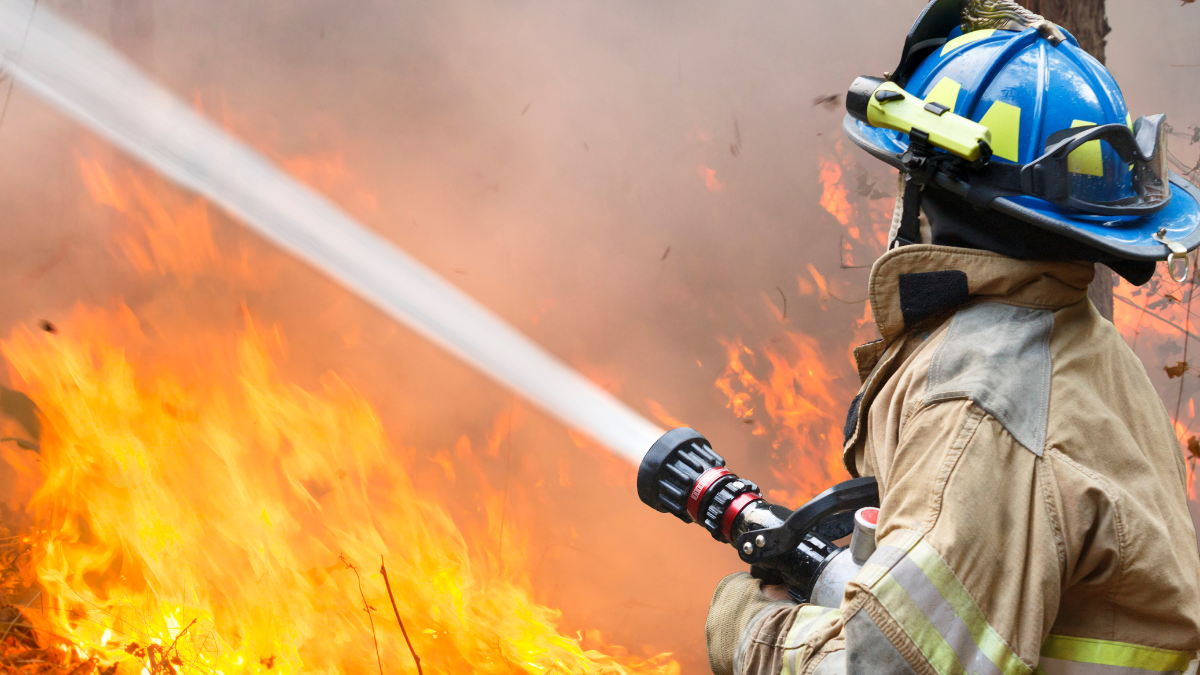
Sunny Sethi doesn’t sound like a person who has taken a sledgehammer to decades of firefighting convention. His tone is clinical, almost underplayed, when he describes how HEN’s nozzles can boost suppression rates by up to 300% while cutting water usage by around 67% a combination that would be headline‑worthy in any other sector.
Fire suppression hardware, particularly the business end of the hose, has changed remarkably little since the 1960s. HEN’s nozzles challenge that inertia with advanced fluidics and embedded controls, engineered to deliver faster coverage, precision targeting and real‑time flow data, all while reducing firefighter fatigue and water damage. The company says its technology is now trusted by more than 1,000 organisations in over 90 countries, via a network of 30‑plus distributors.
Yet when Sethi talks about this achievement, he treats it almost as table stakes. The nozzles, he insists, are the muscle on the ground impressive, but ultimately a means to a much more ambitious end.
Wildfires, an evacuation scare, and a scientist’s ultimatum
Sethi’s path into firefighting didn’t start in a firehouse; it started in the lab. After earning a PhD in materials science and working across nanotech, solar, and automotive manufacturing, founding ADAP Nanotech, and then holding technical leadership roles at SunPower and TE Connectivity, he built a career on high‑performance materials and process innovation.
The pivot came after he moved to California’s East Bay and watched a procession of megafires, Thomas, Camp, and Napa‑Sonoma march uncomfortably close to home. In 2019, while he was travelling, his wife faced potential evacuation alone with their young daughter. Her message, as he tells it, was blunt: “You need to fix this, otherwise you’re not a real scientist.”
That personal ultimatum collided with a grim macro reality: around a billion acres burn globally each year globally, and fires now flash over in under five minutes, fuelled by synthetic furnishings and lightweight construction. HEN, short for High Efficiency Nozzles, was born in 2020 with backing from the US National Science Foundation to apply deep‑tech thinking to an emergency that was both intimate and planetary.
Reinventing the nozzle as a data‑rich instrument
HEN’s first act was to deliver superior fluidics, reshaping how water leaves the hose. The company’s nozzles are engineered to push more water where it counts, faster, using tailored flow patterns that maximise heat absorption and reduce the time it takes to cool and knock down a fire. The payoff, according to Sethi, is up to three‑times faster suppression with roughly two‑thirds less water compared with legacy designs.
But beneath the hydraulics is something more subtle: sensors and software. HEN’s platform vision spans three layers system, engine, and firefighter, combining nozzle‑level intelligence with rig‑level control and centralised decision support. Real‑time gallons‑per‑minute data, stream pattern changes, nozzle movement, even the rhythm of an attack can all be captured, tagged to incident conditions, and fed into what Sethi now describes as a “physics‑grade dataset” of how fires actually behave.
That dataset is the foundation for HEN’s next chapter: an operating system for fire defense, where AI tools help departments plan, train, and respond based on what has been learned from thousands of real firegrounds, not just simulations or after‑action reports.
From hardware startup to AI gold mine
Sethi is the first to admit that building such a platform is daunting. But in his view, selling it is harder. Fire departments are a paradoxical market: culturally close to consumer,s firefighters must love and trust the gear yet embedded in slow, bureaucratic B2B procurement cycles.
“The hardest part is that it’s a B2C play when you think about convincing the customer, but the procurement cycle is B2B,” he says. “You have to make a product that resonates with the end user and still survive government purchasing. We’ve cracked both.”
Investors appear to agree. HEN recently closed a $22 million funding round to accelerate its shift from pure hardware to what one analysis calls a “real‑world physics data platform” an AI play built on the granular realities of water, heat and human movement under stress. The company’s 50‑strong team now includes a former Adobe cloud infrastructure leader as software head, a former NASA engineer and veterans from Tesla, Apple and Microsoft, reflecting the dual ambition of building rugged hardware and cloud‑scale analytics at once.
Building an “intelligent platform of firefighting”
On its own site, HEN describes its mission as “transforming fire defense with advanced technology”, tackling pain points across the ecosystem: faster coverage, precision targeting, less water, reduced fatigue and better decision support. The roadmap stretches from connected nozzles and engine‑bay controls to command‑level dashboards that can prioritise resources, predict fire spread and quantify risk in real time.
In practice, that could mean incident commanders seeing not just where crews are, but how effectively their lines are cooling a structure; city planners using historical flow and outcome data to redesign hydrant grids; or insurers pricing risk based on how well local agencies actually suppress fires, not just how many stations they operate.
For Sethi, the endgame is clear: fires are becoming faster and more destructive; fire defense has to become faster and smarter. The nozzles were the wedge a concrete, unquestionable upgrade for people on the front line. The real disruption may be what comes after: an AI‑enhanced operating system for a world where fire is no longer an occasional disaster, but a chronic, climate‑driven stressor woven into the fabric of everyday risk.
Leave a Reply