Category: Technology

Explore the latest advancements and trends in the world of technology with GulfInsight360.com’s Technology category. From the latest gadgets and innovations to cybersecurity, artificial intelligence, and emerging technologies, our team of tech-savvy writers brings you comprehensive coverage and insightful analysis. Stay informed about the ever-evolving tech landscape, learn about groundbreaking inventions, and discover how technology is shaping our lives and industries.

  • Unleashing the Potential of Software in the AI Era: Mubadala’s Forward-Thinking Investment Strategy

    Unleashing the Potential of Software in the AI Era: Mubadala’s Forward-Thinking Investment Strategy

    In a rapidly evolving technological landscape, the software industry is witnessing exponential growth, fueled by the advent of generative AI. Ali Osman, the head of technology and software investments at Mubadala, a prominent sovereign wealth fund based in Abu Dhabi, shared insightful perspectives on the future of software and the significance of quality data in the AI-driven world. With access to $276 billion in assets under management, Mubadala is strategically investing in technology companies that show immense potential in the software sector. This article delves into Mubadala’s unique approach to software investments, emphasizing the importance of data, long-term growth, and efficient investment strategies

    The software industry is experiencing a revolutionary transformation, with companies increasingly relying on software solutions to optimize their operations and drive efficiency. Software not only empowers businesses to achieve more at a lower cost but also opens avenues for scalability and growth. As a result, investing in the software sector has become a highly competitive endeavor, attracting the attention of renowned private equity firms worldwide.

    Mubadala, being a sovereign wealth fund, takes a unique approach to software investments, focusing on long-term growth and sustainable success. Ali Osman’s team collaborates with prominent private equity firms like Thoma Bravo, TPG, and Bain Capital, making both direct and indirect investments. Their primary objective is to identify software businesses with promising growth potential and provide them with the necessary capital and expertise for their success

    With the rise of generative AI, owning quality data has become a critical factor in the technology market. Data serves as the foundation of AI and software companies, enabling them to develop advanced algorithms and predictive models. Ali Osman emphasizes the significance of high-quality data, which provides a competitive advantage to software companies. He encourages businesses to assess the depth, fidelity, and quality of their data, recognizing its increasing importance in an AI-driven world. 

    Unlike traditional private equity firms seeking immediate exits, Mubadala prioritizes getting the cost structure right and driving healthy growth. This long-term perspective allows them to maintain financial discipline and consider extended ownership periods for their portfolio businesses. By fostering sustainable growth and stability, Mubadala ensures that their investments in the software sector yield fruitful results over time.

    Although the software market presents numerous opportunities for investors, scaling investment strategies effectively and efficiently can be challenging. Capital availability may become a bottleneck, as private-equity firms may be cautious about taking on additional risks and may have limited equity for substantial buyout deals. Despite these challenges, Ali Osman remains optimistic about the software sector’s future and is determined to seize promising opportunities for Mubadala’s portfolio.

    In a world increasingly shaped by AI and technology, the software industry holds immense potential for growth and innovation. Mubadala‘s strategic approach to software investments, focusing on quality data, long-term growth, and financial discipline, positions them for success in this dynamic market. As businesses continue to rely on software solutions for operational excellence, investors play a crucial role in empowering software companies to thrive in the tech-driven future.

  • Dish Network’s Amazon Boost Wireless Partnership Announcement Causes Stock Fluctuation

    Dish Network’s Amazon Boost Wireless Partnership Announcement Causes Stock Fluctuation

    In a bid to expand its wireless services, Dish Network (DISH) recently revealed an exciting collaboration with retail giant Amazon (AMZN). The company announced that it would offer discounted Boost Wireless plans to Amazon Prime members through seamless online sign-ups. This move generated a wave of enthusiasm among investors, causing Dish Network stock to surge in premarket trading. However, as the market opened, the stock took a downward turn. Let’s delve into the details of the partnership and its implications for the telecom industry.

    Dish Network made headlines when it announced its collaboration with Amazon to provide exclusive discounts on Boost Wireless plans. Amazon Prime members would have the convenience of signing up for Dish’s $25 Boost Infinite plan from the comfort of their homes. Additionally, they would enjoy a 20% discount on SIM cards and a $25 credit for the first month of service.

    The news of the partnership sparked excitement among investors, leading to a significant surge in Dish Network stock during premarket trading. However, as the market opened, the initial optimism waned, and the stock saw a decline of 4.9% at 10:13 a.m. The drop came as investors realized that the partnership fell short of earlier speculations that Amazon might offer free wireless service to all Prime members.

    Before the official announcement, rumors circulated that Amazon might provide Dish Network’s wireless service to its vast base of Prime customers. These rumors caused the stocks of major telecom players like AT&T, Verizon, and T-Mobile US to plummet. However, the actual release clarified that the partnership merely involves selling Boost Wireless plans through Amazon’s platform, aligning with the initial reports from The Wall Street Journal.

    While the partnership is a positive development for Dish Network, it falls short of the ambitious expectations set by earlier rumors. Industry analysts see this move as a modest boost for Dish Network but acknowledge that it does not signal free wireless services for Amazon Prime members. According to Mizuho’s Daniel O’Regan, the partnership remains a step forward for Dish Network, albeit not as groundbreaking as initially speculated.

    Dish Network’s partnership with Amazon to offer discounted Boost Wireless plans generated excitement among investors. The convenience of signing up through Amazon’s platform seemed promising, but it fell short of the earlier speculations about free wireless services for Prime members. While the partnership is a positive development for Dish Network, it underscores the significance of distinguishing between speculation and reality in the fast-paced world of business and technology.

  • Kuwait Enacts Sweeping Ban on Cryptocurrency, Citing Money Laundering Concerns

    Kuwait Enacts Sweeping Ban on Cryptocurrency, Citing Money Laundering Concerns

    In a major regulatory move, Kuwait has implemented a comprehensive ban on the use of cryptocurrency for payments and investments. The decision comes as the country’s Capital Markets Authority (CMA) seeks to address concerns related to money laundering and financial security.

    The new regulations, unveiled by the CMA, impose an “absolute prohibition” on the use of digital currencies in making payments. All virtual assets have been declared illegal, and the ban extends to cover digital asset mining as well. Furthermore, Kuwaiti businesses are strictly forbidden from providing any services related to cryptocurrencies.

    This move reflects the joint efforts of the Central Bank of Kuwait, the Capital Markets Authority, the Ministry of Commerce and Industry, and the Insurance Regulatory Unit, who have all issued circulars on the issue of virtual assets. The authorities have decided not to recognize cryptocurrency as a decentralized currency, and they caution consumers to refrain from using it for transactions.

    The circulars were issued in accordance with the recommendations set forth by the Financial Action Task Force (FATF), which focuses on combating money laundering and terrorist financing. Kuwait’s National Committee for Combating Money Laundering and Financing of Terrorism conducted a study that supported the decision to implement Recommendation No 15 of the FATF’s international requirements.

    As a result of these new regulations, it is now illegal to engage in transactions involving virtual currencies as a means of payment or investment within the country’s jurisdiction. Any entity found providing such services to customers will be in violation of the law. The authorities have explicitly stated that no licenses have been issued for providing virtual asset services as a business.

    The ban aligns with the CMA’s commitment to bolstering financial security and adhering to international standards. It also comes as part of Kuwait’s broader efforts to safeguard its financial system and maintain compliance with global anti-money laundering measures.

    The move has sparked discussions among financial experts, with some expressing concerns over its potential impact on technological innovation and the broader financial landscape. However, the regulatory authorities assert that their primary objective is to protect the interests of citizens and businesses and maintain a stable and secure financial environment.

    While the ban prohibits the use of cryptocurrency, the circulars make it clear that securities regulated by the Central Bank of Kuwait and other financial instruments under the purview of the Capital Markets Authority are exempt from this prohibition.

    The ban on cryptocurrency and digital asset-related activities is set to take effect immediately, with mobile operators and financial institutions required to ensure compliance with the new regulations. The decision marks a significant milestone in Kuwait’s financial landscape and is expected to have ripple effects on the broader region’s approach to digital currencies and financial security.

    In conclusion, Kuwait‘s move to ban cryptocurrency and digital asset-related activities reflects the country’s commitment to safeguarding its financial system from potential money laundering risks. As the global landscape continues to evolve in the digital realm, Kuwait’s regulatory authorities have taken proactive measures to protect its citizens and businesses and maintain compliance with international standards. The ban will undoubtedly shape the future of digital currency adoption and financial security measures in the region and beyond.

  • Singapore to Discontinue 3G Services by July 2024: Mobile Operators Take Proactive Measures

    Singapore to Discontinue 3G Services by July 2024: Mobile Operators Take Proactive Measures

    Singapore’s major mobile operators, M1, Singtel, and StarHub, have jointly announced the retirement of all 3G services on 31 July 2024, including voice messaging and data. The move comes as 3G networks are no longer widely used in the country, with only a small percentage of users relying on older devices or SIM cards that cannot connect to newer networks. The retirement of 3G will allow the operators to reallocate spectrum for enhancing 5G services, providing faster speeds, higher data throughput, and improved security and reliability.

    As the era of 3G technology draws to a close, Singapore is taking a step forward in its telecommunications landscape. The country’s major mobile operators, M1, Singtel, and StarHub, have announced their plans to discontinue all 3G services, including voice messaging and data, starting on 31 July 2024. This move comes as 3G networks have seen a significant decline in usage, with only a small percentage of users still relying on the aging technology.

    In a joint statement, the mobile operators emphasized that the retirement of 3G services is a necessary step, given that the majority of users have already migrated to newer networks, such as 4G and 5G. The few remaining 3G users are typically using older devices or SIM cards that are not compatible with the latest network technologies. By phasing out 3G, the operators can streamline their services and allocate resources more efficiently to meet the growing demand for advanced network capabilities.

    The decision to retire 3G will also have significant benefits for the development and enhancement of 5G services in Singapore. With the freed-up spectrum from the discontinued 3G networks, mobile operators will have more resources to dedicate to the expansion of their 5G infrastructure. This means that Singaporeans can look forward to faster internet speeds, improved data throughput, and enhanced security and reliability with the wider adoption of 5G technology.

    Singapore’s shift away from 3G is in line with global trends, as many countries have already moved towards the deployment of 4G and 5G networks. These newer generations of mobile technology offer substantial improvements over 3G, providing faster connections, lower latency, and better support for data-intensive applications. As such, the retirement of 3G services is a natural progression towards a more advanced and interconnected digital future.

    For users who are still on 3G, the mobile operators are taking proactive measures to assist them in transitioning to newer networks. They are encouraging these users to upgrade their devices or SIM cards to ones that support 4G or 5G technology. Additionally, the operators are offering support and guidance to ensure a smooth migration process, minimizing any inconvenience for the affected users.

    The retirement of 3G is not only a technical upgrade but also an opportunity for Singapore to stay at the forefront of telecommunications innovation. As a leading global hub for technology and connectivity, the country aims to provide its residents and businesses with the most advanced and reliable network services. Embracing 5G will enable Singapore to continue its digital transformation journey and unlock new possibilities for various sectors, including healthcare, transportation, education, and more.

    With the impending discontinuation of 3G, mobile operators are encouraging users to check if their devices are 4G or 5G compatible. This simple step will ensure that users can seamlessly continue to access voice calls, messaging, and data services without interruption. For those using older devices, upgrading to a 4G or 5G-compatible device will be necessary to enjoy the full benefits of the modern network infrastructure.

    In conclusion, Singapore‘s decision to retire 3G services marks a significant milestone in the country’s telecommunications evolution. With the majority of users already utilizing advanced network technologies, the retirement of 3G will pave the way for the expansion and improvement of 5G services. This move reaffirms Singapore’s commitment to staying at the forefront of technology and innovation, providing its residents with cutting-edge network capabilities. As 3G becomes a thing of the past, Singapore embraces the future with 5G, unlocking a new era of digital possibilities for its citizens and businesses alike.

  • Apple Developing AI Tools to Compete with OpenAI: The Rise of “Apple GPT”

    Apple Developing AI Tools to Compete with OpenAI: The Rise of “Apple GPT”

    Apple has quietly been making significant strides in the field of artificial intelligence (AI), with plans to challenge industry giants like OpenAI and Google. The tech giant has developed its framework called “Ajax” to create large language models, akin to ChatGPT and Google’s Bard. With the introduction of its in-house chatbot service, unofficially referred to as “Apple GPT,” The company is stepping up its AI game. While the company has yet to announce a clear strategy for releasing these AI tools to consumers, it is evident that the company is positioning itself to remain competitive in the rapidly evolving AI landscape.

    Recent months have witnessed The company’s focused efforts in AI development, with several teams collaborating on the project. Acknowledging the potential privacy concerns associated with AI technology, the company is making strides to address them while working towards delivering exceptional AI services.

    Despite its AI integration in various products, The company found itself playing catch-up in the flourishing market of generative AI tools. OpenAI’s ChatGPT, Google’s Bard, and Microsoft’s Bing AI had overshadowed Apple’s Siri voice assistant, prompting the company to explore new AI frontiers. While The company’s photo and search improvements have showcased AI progress, the company’s main artificial intelligence product, Siri, has faced stagnation. In light of recent advancements in generative tools that can create content based on text prompts, The company’s AI endeavors have gained momentum.

    In an effort to stay relevant in the AI domain, The company created its framework called “Ajax.” This framework serves as the bedrock for AI services and facilitates the development of large language models. Notably, The company has leveraged Ajax to introduce AI-related improvements to search, Siri, and maps on its devices. Moreover, it has become the foundation for the internal chatbot service referred to as “Apple GPT.”

    Apple GPT was initially developed as an experiment by a small engineering team at the end of the previous year. While its internal deployment was momentarily halted due to security concerns surrounding generative AI, it has gradually been extended to more employees. However, access to the system requires special approval and outputs from Apple GPT cannot be utilized to develop customer-facing features.

    Despite its restricted availability, The company employees are employing Apple GPT for product prototyping and data summarization, as well as to answer questions based on trained data. The chatbot tool essentially emulates the capabilities of Bard, ChatGPT, and Bing AI, but with a stripped-down design unsuitable for public consumption. As of now, The company has no plans to release it to consumers but is actively working on refining its underlying models.

    The company recognizes the significance of generative AI and is actively exploring various consumer angles for its integration. With a cross-company effort involving AI, software engineering, and cloud services engineering teams, the company is working towards making a significant AI-related announcement in the near future. The company’s Head of Machine Learning and AI, John Giannandrea, and Craig Federighi, the top software engineering executive, are leading these initiatives, aiming to keep The company at the forefront of AI innovation.

    The company’s Ajax system is built on top of Google Jax, the search giant’s machine learning framework. Leveraging Google Cloud alongside its own infrastructure and Amazon’s AWS, The company seeks to enhance its AI capabilities and infrastructure to match industry standards.

    As part of its ongoing AI endeavors, The company is actively seeking to hire experts in generative AI. The company aims to apply this technology to enhance communication, content creation, connectivity, and media consumption on its devices, particularly iPhones.

    The company’s recent AI push and development of its “Apple GPT” chatbot tool demonstrate its determination to compete with AI industry leaders. With Ajax serving as the foundation for AI services and Apple GPT showcasing its AI capabilities, the company is positioning itself to remain relevant in the ever-changing landscape of artificial intelligence. As The company continues to refine its AI tools and explore consumer applications, its future AI-related announcements are highly anticipated. By harnessing the power of generative AI, The company aims to redefine how users interact with its devices and, ultimately, improve the overall user experience.

  • Twitter Users Unimpressed with Elon Musk’s Logo Change to “X”: Hilarious Backlash Ensues

    Twitter Users Unimpressed with Elon Musk’s Logo Change to “X”: Hilarious Backlash Ensues

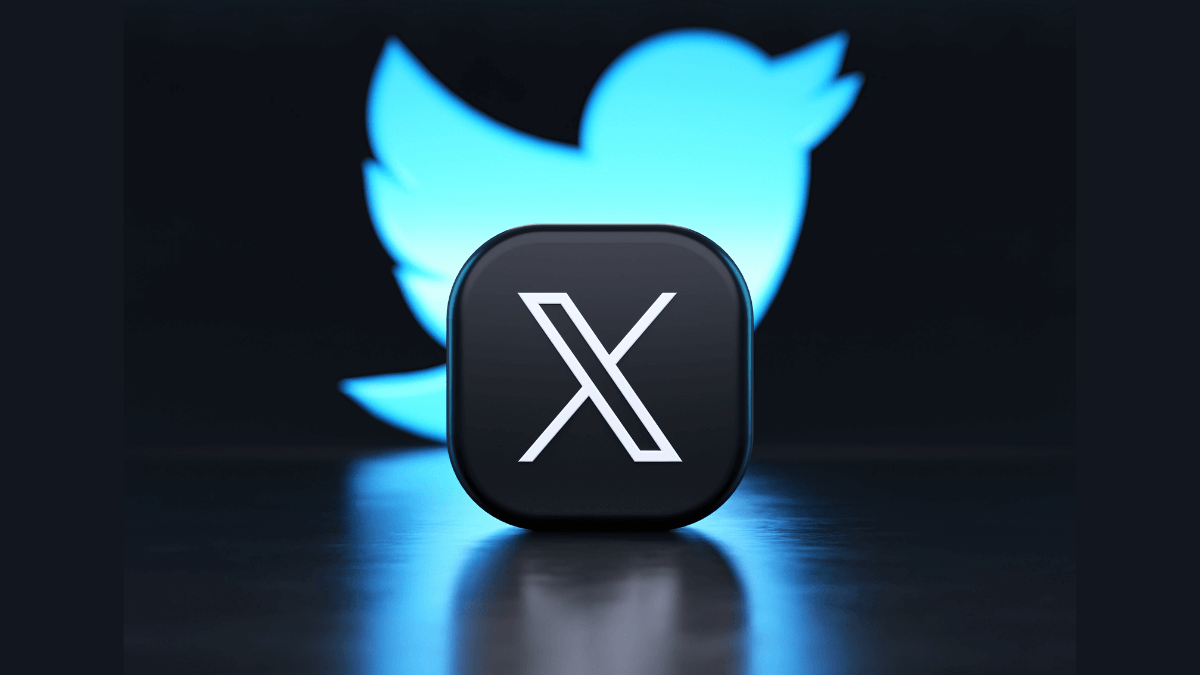
    Elon Musk, the billionaire entrepreneur and CEO of various companies, recently stirred up the Twitter verse when he decided to change Twitter’s iconic blue bird logo to a simple “X.” This rebranding move has led to a flood of hilarious tweets from users, mocking the decision and the perceived absurdity of the new logo. Let’s take a closer look at the reaction and the reasons behind Musk’s logo change.

    On July 24th, Musk revealed the new logo by projecting an “X” onto The company’s San Francisco headquarters. He announced that the The company brand would soon bid adieu, along with all the birds, signaling the significant change he intended to make on the social media platform. This change came after Musk acquired The company for a whopping $44 billion in April and subsequently renamed the company from Twitter Inc. to X Corp.

    Despite Musk’s intention to make the logo change symbolic of embracing imperfections and uniqueness, the community was far from impressed. Users took to the platform to share their own “X” tweets, poking fun at Musk’s business decision. The overwhelming response was one of ridicule, as many found the move to be unnecessary and even bizarre. One of the tweet is in the following:


    Musk’s changes to The company didn’t stop at the logo; he introduced several major alterations, such as limiting daily direct messages and daily reading posts for unverified users. These changes, coupled with the logo rebranding, haven’t resonated well with most people on the platform. The backlash indicates that users prefer the original branding and functionality.

    Despite the widespread mockery, The company CEO Linda Yaccarino expressed excitement for the “X” logo. She believes it represents the future state of unlimited interactivity, emphasizing audio, video, messaging, payments, and banking. Yaccarino envisions “X” creating a global marketplace for ideas, goods, services, and opportunities, powered by artificial intelligence.

    Musk’s impact extended beyond The company, as Meta (the parent company of Instagram) launched its own company’s competitor, Threads, on July 5. This move was met with accusations of being a copycat, prompting Musk to challenge Meta owner Mark Zuckerberg to a Twitter feud. The exchange garnered significant attention, with Musk humorously proposing a physical fight in “Vegas Octagon.”

    Elon Musk‘s decision to change The company’s iconic bird logo to an “X” has sparked an array of humorous reactions on the platform. While Musk sees it as a representation of embracing uniqueness, most users perceive it as an unnecessary and peculiar move. As the Twitter community continues to mock the “X” logo, Musk’s other changes to the platform have also faced criticism. Only time will tell if these bold rebranding moves will find wider acceptance or further fuel the social media conversation.

  • Apple TV App Presents Lionel Messi’s Historic Debut with Inter Miami CF on MLS Season Pass Celebration

    Apple TV App Presents Lionel Messi’s Historic Debut with Inter Miami CF on MLS Season Pass Celebration

    Apple is celebrating the much-anticipated debut of football legend Lionel Messi with Inter Miami CF on MLS Season Pass. Fans worldwide can now witness all the Messi action, including the Leagues Cup tournament, starting from July 21. With enhanced production and exclusive content, the Apple TV app provides an immersive experience for football enthusiasts to enjoy the historic moment of Messi’s arrival in Major League Soccer.

    As Inter Miami CF takes on LIGA MX’s Cruz Azul to kick off the Leagues Cup, football fans in over 100 countries and regions can tune in to MLS Season Pass. The English and Spanish broadcast, along with elevated production elements, adds to the excitement of witnessing Messi’s debut with Inter Miami CF. Apple’s dedicated coverage includes 18 cameras, Steadicam, super-slow-motion cameras, Skycam, drone coverage, and on-site sideline reporters in both Spanish and English.

    To celebrate Lionel Messi’s arrival to MLS with Inter Miami CF, Apple Fitness+ introduces a 20-minute HIIT workout with a Latin Grooves playlist. Led by Fitness+ trainer Bakari Williams, the workout features soccer-themed variations of four moves. The trainers don Inter Miami jerseys, and the playlist is inspired by Latin culture, reflecting the club’s vibrant home-city atmosphere.

    Apple News now features a dedicated Sports tab, allowing fans to follow their favorite MLS clubs and stay updated on games with MLS Season Pass through the Apple TV app. Moreover, Apple TV+ announced an exclusive four-part documentary series offering behind-the-scenes access to Messi and his FIFA World Cup journey, concluding with Argentina’s dramatic win at Qatar 2022.

    Lionel Messi’s arrival coincides with Apple and Major League Soccer’s 10-year partnership, which commenced in early 2023. Following the Leagues Cup tournament, Inter Miami CF will continue its regular season play against Charlotte FC on August 20. With MLS Season Pass, subscribers can enjoy all MLS and Leagues Cup matches in multiple languages without any blackouts, accessible on various devices through the Apple TV app.

    MLS Season Pass, offered through the Apple TV app, is available in more than 100 countries and regions, providing access to MLS and Leagues Cup matches, as well as MLS NEXT Pro and MLS NEXT games in English, Spanish, or French. Leagues Cup is an official Concacaf tournament featuring 47 clubs from LIGA MX and MLS, running from July 21 to August 19. The top three finishers qualify for the 2024 Concacaf Champions Cup. Viewers can enjoy pregame and postgame shows, on-demand content celebrating the diverse cultures of MLS and LIGA MX, and a full recap of the day’s action.

    Fans can subscribe to MLS Season Pass on the Apple TV app for $14.99 per month during the season or $49 for the rest of the season. Apple TV+ subscribers can avail a special price of $12.99 per month or $39 for the rest of the season. MLS club full-season ticket account holders receive a complimentary subscription, and up to six family members can share the subscription through Family Sharing.

    Apple’s celebration of Lionel Messi‘s Inter Miami CF debut on MLS Season Pass reflects the excitement and global interest in this historic moment. Football enthusiasts can relish the action with an immersive viewing experience, enriched with exclusive content and behind-the-scenes access. With a lasting partnership with Major League Soccer and a dedication to providing top-quality entertainment, Apple continues to engage sports fans and elevate their viewing experiences through innovative features and content offerings.

  • Twitter’s Iconic Bird Logo Replaced with ‘X’ in Elon Musk’s Bold Move

    Twitter’s Iconic Bird Logo Replaced with ‘X’ in Elon Musk’s Bold Move

    In a bold and surprising move, Twitter’s iconic bird logo has been replaced with the letter ‘X’ as its official logo. The decision came after Elon Musk, the CEO of Tesla and owner of the company, announced the change over the weekend. The new ‘X’ logo is now live on the website, reflecting Musk’s vision for the platform’s transformation.

    Elon Musk, known for his fascination with the letter ‘X,’ unveiled the new Twitter logo with a tweet. He confirmed that x.com now redirects to twitter.com, and he referred to the ‘X’ logo as an “interim” logo, suggesting that another logo change might be in the pipeline.

    Elon Musk’s plans for the company go beyond a mere logo change. He expressed his intentions to eventually bid adieu to the company’s brand and gradually eliminate all references to birds from the platform. This indicates a profound shift in the platform’s identity, with the letter ‘X’ becoming a central element.

    The new logo signals a shift in the company’s direction under Musk’s leadership. The platform aims to evolve into “X, the everything app,” integrating social media and payment functionalities akin to China’s WeChat. This ambitious vision aligns with Musk’s earlier venture, X.com, which evolved into the renowned PayPal service.

    This is not the first time Elon Musk has experimented with the company’s logo. Earlier this year, he briefly replaced the bird logo with the Doge meme, garnering mixed reactions from users. Musk’s propensity for announcing significant changes in the company has led to both excitement and uncertainty within the Twitter community.

    The transition to the ‘X’ logo might be challenging for many Twitter users who have grown accustomed to the iconic bird logo. Critics argue that the series of changes under Musk’s leadership has led to confusion and tarnished the platform’s once-iconic brand.

    The company’s CEO, Linda Yaccarino, confirmed the launch of the new ‘X’ brand, highlighting its focus on audio, video, messaging, payment, and banking features. The new Twitter vision aims to transform the platform into a global marketplace for ideas, goods, services, and opportunities.

    Despite Elon Musk’s ambitions for Company’s future, the platform faces financial challenges. Musk recently revealed that the company remains in negative cash flow due to a ~50% drop in advertising revenue and a heavy debt burden. The loss of advertising revenue has impacted the platform’s plans to become cashflow-positive by June.

    Advertisers’ concerns about the changes introduced under Musk’s ownership have led many to cut back on their ad spending. Musk’s actions, such as removing the legacy “blue ticks” and allowing users to pay for verification, have generated controversy and backlash from users and brands alike.

    The future of the company’s rebranding and its adoption of the ‘X’ logo remains uncertain. Musk’s tendency to announce changes spontaneously on Twitter has sparked both anticipation and skepticism among users and industry experts.

    Twitter’s iconic bird logo being replaced by the letter ‘X’ marks a significant shift in the platform’s identity under Elon Musk‘s ownership. As the platform transitions towards becoming “X, the everything app,” it faces challenges in retaining user loyalty and attracting advertisers. The success of company’s rebranding and transformation will depend on Musk’s ability to navigate these challenges and realize his ambitious vision for the platform’s future.

  • ChatGPT Launches on Android: Pre-Order Today for Seamless Chatbot Experience

    ChatGPT Launches on Android: Pre-Order Today for Seamless Chatbot Experience

    OpenAI’s popular chatbot, ChatGPT, is expanding its reach to Android users with a new app. Following the success of its iOS launch, ChatGPT aims to replicate its popularity on Android devices. With a dedicated app interface and seamless synchronization across devices, users can pre-order the Android version and experience the convenience of this ubiquitous chatbot wherever they go. As the rollout begins in the U.S., global availability is expected in the coming weeks or months, providing a powerful and user-friendly chatbot experience to users worldwide.

    After a successful launch on iOS, ChatGPT, the ubiquitous chatbot by OpenAI, is now opening up for “pre-order” on Android. With the iPhone version already making waves with half a million downloads in the first week, the Android release is anticipated to follow suit. Offering a dedicated app experience, users can enjoy the full functionality of ChatGPT on the go, making conversations and interactions even more convenient.

    The iOS launch of ChatGPT witnessed an overwhelming response, with users downloading the app half a million times in just the first week. The app’s dedicated interface and powerful features provided an exceptional user experience. However, it faced tough competition from Threads, a rival chatbot that managed to outshine ChatGPT’s initial success. Now, as the Android version is set to debut, OpenAI is looking forward to replicating its popularity on a new platform.

    One of the key benefits of the ChatGPT app is its seamless synchronization across devices. Users can sync their conversations and preferences between their Android and iOS devices, allowing for a consistent chatbot experience. Whether they are at home with an iPhone or at work with an Android device, users can pick up conversations without missing a beat.

    The Android version of the ChatGPT app is expected to be on par with its iOS counterpart in terms of functionality. Users can expect access to the same features available on the web-based version. While some iOS-specific additions, such as Siri and Shortcuts integration, might not be directly transferable, Android users can look forward to similar enhancements. OpenAI is continually working to ensure that both versions provide a robust and user-friendly chatbot experience.

    OpenAI announced that the Android app would start rolling out to users in the U.S. next week. Although there were no specific mentions of launch plans for other countries, it is likely that the app will expand its availability globally in the coming weeks or months. During its iOS launch, ChatGPT quickly became available in multiple countries, and a similar expansion is expected for the Android version.

    For Android users eager to get their hands on the ChatGPT app, pre-ordering is now possible. By clicking “pre-register” on the Play Store, interested users will be notified as soon as the app goes live. This ensures that they can be among the first to experience the power of ChatGPT on their Android devices.

    With the ChatGPT app set to make its mark on Android devices, users can look forward to a seamless and powerful chatbot experience. OpenAI’s commitment to providing a dedicated app for both iOS and Android showcases their dedication to accessibility and user convenience. As the Android version rolls out to users, the app’s popularity is expected to soar, further solidifying ChatGPT’s position as one of the leading chatbot solutions in the market. So, don’t miss the chance to pre-order and explore the world of ChatGPT on your Android device!

  • Meta and Microsoft Unveil Llama 2: The Next Frontier of Open-Source AI

    Meta and Microsoft Unveil Llama 2: The Next Frontier of Open-Source AI

    Get ready to witness the AI revolution with Llama 2, the latest sensation by Meta and Microsoft. This powerful open-source large language model is redefining possibilities in research and beyond, available for everyone to explore and harness its potential – absolutely free!

    Llama 2 is your gateway to endless innovation. From academia to startups, businesses to researchers, the opportunities are limitless. Unleash your creativity and bring revolutionary AI-powered experiences to life. Picture immersive content creation, groundbreaking natural language processing, and cutting-edge customer interactions, all within your grasp.

    But that’s not all! With Llama 2’s open-source nature, transparency and collaboration thrive. The AI community can stress-test and fine-tune this marvel together, ensuring safety and security at every step. Embrace the future of responsible AI development as you delve into Llama 2’s possibilities.

    Buckle up and embark on a transformative journey with Llama 2. Embrace innovation, explore untapped potential, and revolutionize the world with the next-gen AI wonder! The future is now, and it’s yours to create with Llama 2.

    Know Everything bout Llama 2

    • What is Llama 2?

    Llama 2 is a large language model (LLM) developed by Meta AI. It is a successor to Meta’s Llama 1 language model, which was released in the first quarter of 2023. Llama 2 is trained on a vast dataset of publicly available internet data, enjoying the advantage of a dataset both more recent and more diverse than that used to train Llama 1.

    • How to use Llama 2?

    Llama 2 is available for free for research and commercial use. You can access the code and data for Llama 2 on the Meta AI website. Once you have the code and data, you can fine-tune Llama 2 to your specific needs.

    • Llama 2 vs. GPT-3

    Llama 2 and GPT-3 are both large language models that have been trained on massive datasets of text and code. However, there are some key differences between the two models. Llama 2 is trained on a more recent and diverse dataset than GPT-3, which gives it an advantage in some tasks. Additionally, Llama 2 is open source, while GPT-3 is not. This means that Llama 2 is more accessible to researchers and developers.

    • Llama 2 vs. ChatGPT

    Llama 2 and ChatGPT are both chatbots that are powered by large language models. However, there are some key differences between the two chatbots. Llama 2 is trained on a more recent and diverse dataset than ChatGPT, which gives it an advantage in some tasks. Additionally, Llama 2 is open source, while ChatGPT is not. This means that Llama 2 is more accessible to researchers and developers.

    • Llama 2 benchmarks

    Llama 2 has been benchmarked on a variety of tasks, including reasoning, coding, proficiency, and knowledge tests. In general, Llama 2 outperforms other open-source language models on these tasks.

    • Llama 2 fine-tuning

    Llama 2 can be fine-tuned to improve its performance on specific tasks. This can be done by feeding Llama 2 a dataset of text and code that is relevant to the task you want it to perform.

    • Llama 2 impact challenge

    Meta AI is hosting an impact challenge for Llama 2. The challenge is to encourage a diverse set of public, non-profit, and for-profit entities to use Llama 2 to address environmental, education, and other important challenges.

    • Llama 2 code and data

    The code and data for Llama 2 are available on the Meta AI website. You can download the code and data to fine-tune Llama 2 or use it for your own research.

    You can download Llama 2 from the Meta AI website. The download includes the code, data, and documentation for Llama 2.