Explore the latest advancements and trends in the world of technology with GulfInsight360.com’s Technology category. From the latest gadgets and innovations to cybersecurity, artificial intelligence, and emerging technologies, our team of tech-savvy writers brings you comprehensive coverage and insightful analysis. Stay informed about the ever-evolving tech landscape, learn about groundbreaking inventions, and discover how technology is shaping our lives and industries.
Microsoft is leading the charge in shaping a responsible AI landscape by wholeheartedly embracing the Biden-Harris administration’s groundbreaking commitments. These visionary promises aim to ensure that advanced AI systems remain safe, secure, and, above all, trustworthy. By standing alongside other industry giants, Microsoft is taking bold steps to expand its commitment to responsible AI practices.
With speed and determination, the White House’s voluntary commitments create a strong foundation to keep AI’s limitless potential ahead of any potential risks. Microsoft applauds President Biden’s leadership in uniting the tech industry, forging concrete steps to make AI safer, more secure, and ultimately more beneficial for the public.
Rooted in the unyielding principles of safety, security, and trust, these voluntary commitments address the risks posed by advanced AI models. They advocate specific practices, such as red-team testing and transparency report publication, designed to propel the entire AI ecosystem forward. These commitments build upon the robust work undertaken by the U.S. Government, like the NIST AI Risk Management Framework and the Blueprint for an AI Bill of Rights, while seamlessly complementing measures developed for high-risk applications in Europe and beyond. Microsoft eagerly anticipates their broad adoption across the industry and their integration into global discussions surrounding a comprehensive international code of conduct.
But Microsoft’s commitments don’t stop there. The tech giant is actively fortifying the AI ecosystem by operationalizing the core principles of safety, security, and trust. From supporting a pilot of the National AI Research Resource to advocating for a national registry of high-risk AI systems, Microsoft is taking tangible actions to enhance transparency and accountability. Moreover, Microsoft is committed to the widespread implementation of the NIST AI Risk Management Framework, bolstered by cybersecurity practices tailored to address AI’s unique risks. By doing so, Microsoft is forging a path towards AI systems that can be trusted, benefiting customers and society as a whole.
Emphasizing the importance of community, Microsoft recognizes that crafting and implementing such commitments requires a collective effort. Gratitude goes to leaders like Kevin Scott, Microsoft’s Chief Technology Officer, who co-sponsors the responsible AI program, and influential figures like Natasha Crampton, Sarah Bird, Eric Horvitz, Hanna Wallach, and Ece Kamar, who have played pivotal roles in shaping the responsible AI ecosystem.
As the White House’s voluntary commitments highlight, the human element remains central to all AI endeavors. With unwavering leadership in place, Microsoft is poised to fulfill its commitments and continue nurturing the program that has evolved over the past seven years. By establishing codes of conduct early in AI’s development, Microsoft seeks to safeguard safety, security, and trustworthiness, while harnessing AI’s immense potential to positively impact communities across the U.S. and around the globe.
Get Ready to Glam Up Your Virtual Meetings with Microsoft Teams and Maybelline’s AI-Powered Virtual Makeup Filters! Say goodbye to mundane video calls and hello to 12 unique looks that boost your appearance and confidence. Pick from a variety of digital makeup colors and blur effects, all with just a click before joining your next Teams call. Developed in collaboration with the Geena Davis Institute to represent a diverse population, this innovative feature brings fashion and beauty to the video conferencing market. Whether in-person or virtual, express your beauty and put your best foot forward effortlessly with Maybelline’s virtual makeup looks!
Table of Contents
“Step into the Future of Video Conferencing with Microsoft Teams and Maybelline’s Revolutionary AI-Powered Virtual Makeup Filters! Powered by cutting-edge AI technology from Modiface, an augmented reality platform for the beauty industry under L’Oreal, the parent company of Maybelline, this groundbreaking feature takes virtual try-on services to a whole new level.
Modiface’s advanced AI functionality identifies over 70 points on the user’s face, creating a precise ‘virtual map’ that seamlessly applies the selected digital makeup filters. From flawless foundation and eye-catching eyeshadows to striking lip colors and artistic blur effects, these filters let you experiment with different styles, all without the need for physical makeup products.
The virtual makeup filters are thoughtfully designed to replicate the actual Maybelline products and shades, giving you a detailed rundown of the exact makeup being applied virtually. Discover the perfect look that suits your personality and style, and if you’re inspired to try it in real life, Maybelline has got you covered.
Designed in collaboration with the Geena Davis Institute, this feature aims to be inclusive and diverse, catering to a broad range of users with various skin tones and preferences. Now, whether you’re attending an important work presentation, connecting with friends, or simply looking to boost your confidence, Microsoft Teams and Maybelline have made it easier than ever to express your beauty and feel your best, all with just a click.
Available initially in preview for Microsoft Teams enterprise customers, this exciting collaboration promises to redefine virtual meetings and enhance the way you connect with others. So, why wait? Get camera-ready and experience the magic of AI-Powered Virtual Makeup Filters in your next Teams call!”
Maybelline App for Microsoft Teams: How to Get Started with AI-Powered Virtual Makeup Filters
Exciting news for Microsoft Teams users! Maybelline’s AI-powered virtual makeup filters are now available in preview mode, making virtual meetings more engaging and empowering. Initially rolling out to Microsoft Teams enterprise customers today, this innovative collaboration promises to revolutionize the way you present yourself during video calls.
Getting Started with the Maybelline App in Teams:
Exciting news for Microsoft Teams users! Maybelline’s AI-powered virtual makeup filters are now available in preview mode, making virtual meetings more engaging and empowering. Initially rolling out to Microsoft Teams enterprise customers today, this innovative collaboration promises to revolutionize the way you present yourself during video calls.
How to Get Started with AI-Powered Virtual Makeup Filters
Before Your Next Meeting:
Click on “Join meeting” to enter the virtual meeting room.
Click “Video Effects” to access the array of exciting features.
Then, select “More Video Effects” to explore the full range of options.
Scroll down in the right pane and find the “Maybelline” filters under the “Filters” category.
Browse through the collection of 12 unique looks and pick your favorite one.
Once you’ve made your choice, click “Join now” to activate the selected look for your meeting.
Choosing a Look During an Ongoing Meeting:
If you’ve already joined a meeting but want to enhance your appearance, it’s not too late.
Click on “More…” at the top of your meeting screen to reveal additional options.
Locate and click “Video Effects” to access the range of available features.
Scroll down in the right pane to find the “Maybelline” filters under the “Filters” category.
Explore the variety of looks and select the one that resonates with you.
To see how the chosen look appears on your video, click “Preview.”
When you’re ready to activate the selected look for others to see, click “Apply.”
With the Maybelline app in Microsoft Teams, expressing your personal style and boosting your confidence has never been easier. These AI-powered virtual makeup filters provide a seamless and fun way to transform your appearance during video calls. Whether it’s for work, socializing, or simply feeling your best, Maybelline and Microsoft Teams have collaborated to make your virtual meetings more exciting and vibrant.
Take advantage of this preview mode to explore the range of looks, and stay tuned for the global release that will be rolling out to all Teams users. Get ready to dazzle and stand out during your virtual meetings with the Maybelline app in Microsoft Teams!
Twitter, the popular social media platform owned by Elon Musk and led by Leslie Yaccarino, is making significant strides to evolve beyond being just a platform for sharing thoughts and tweets. In a strategic move to provide more services to business users, Twitter is reportedly rolling out a job posting feature exclusively for verified organizations. This development comes as the platform faces comparisons to Meta’s Threads and sets its sights on competing with LinkedIn as a go-to platform for both social interaction and job searching.
Table of Contents
Twitter’s introduction of the job posting feature for verified organizations marks a significant step towards its goal of becoming more than just a social media platform. By emulating LinkedIn’s job posting functionality, Twitter aims to attract businesses, offer enhanced services to its users, and potentially challenge LinkedIn’s dominance in the professional networking space. As this feature begins to roll out, it remains to be seen how businesses and job seekers will embrace this new opportunity on the platform. networking and job-searching arena.
Twitter’s Ambitions for Diversification:
With a user base of over 528 million users, Twitter has consistently expressed ambitions to expand its offerings beyond conventional social media. Elon Musk, the enigmatic entrepreneur behind Twitter, envisions the platform as something more akin to the Chinese giant WeChat, which offers a comprehensive range of services beyond just social networking.
Twitter’s Bid to Take on LinkedIn:
The latest move by Twitter positions it one step closer to challenging LinkedIn’s dominance in the professional networking space. Verified organizations on Twitter will soon have the ability to post job ads directly on their profiles. Although the platform hasn’t made an official announcement about this feature, some verified organizations have already started using it to post job listings under their Twitter bios. Interested applicants are directed to the company’s website, where they can access additional information about the job and submit their applications seamlessly.
The Twitter Hiring Account:
Twitter has gone further in its preparations for the job posting feature by creating an official account called “@TwitterHiring.” While the account has yet to post any content, its existence suggests that a wider rollout of the job posting feature is imminent.
Twitter’s New Feature: Job Posting
Understanding the Job Posting Feature:
The job posting feature will be available for verified organizations on Twitter at no extra cost. The platform aims to attract businesses by touting its massive user base as an effective way to reach potential candidates. Verified organizations can post job listings directly on their profiles, showcasing up to five featured job posts. To facilitate easy posting, jobs can be imported via supported Applicant Tracking Systems or through XML feeds.
Twitter’s Mysterious Confirmations:
Getting official confirmation from Twitter has proven challenging, with emails sent to the company’s press department yielding quirky automated responses in the form of a poop emoji. However, Adam Ryan, CEO of Workweek, has confirmed that his organization, a verified account, has gained access to the job posting feature at no additional cost. Although screenshots of the new profile UI have been shared, some verified accounts may not yet have job listings displayed.
The Bigger Picture:
This move by Twitter aligns with its earlier acquisition of Laskie, a tech talent-hiring platform, back in May. Speculations had arisen that Twitter was poised to launch its own jobs section, and this development seems to confirm those suspicions. With the platform’s push for diversification and aspirations to become a multi-faceted service, Twitter is positioning itself as a potential powerhouse in the professional
Twitter’s introduction of the job posting feature for verified organizations marks a significant step towards its goal of becoming more than just a social media platform. By emulating LinkedIn’s job posting functionality, Twitter aims to attract businesses, offer enhanced services to its users, and potentially challenge LinkedIn’s dominance in the professional networking space. As this feature begins to roll out, it remains to be seen how businesses and job seekers will embrace this new opportunity on the platform. networking and job-searching arena.
UAE Leisure, Entertainment, and Tourism (LET) Digital Services Market: Emerging Trends and Growth Opportunities. The UAE Leisure, Entertainment, and Tourism (LET) industry has experienced significant growth in recent years, driven by the country’s booming tourism sector. To enhance the customer experience and increase ticket sales, UAE LET attraction sites have actively adopted digital services such as ticketing systems, cashless systems, RFID services, and more. This trend is expected to continue in the coming years, as the UAE government focuses on making the country a top destination for both business and leisure travelers.
Table of Contents
Market Definition and Scope:
LET Digital Services refer to the technologies used by tourism and entertainment venues to efficiently manage their operations and provide engaging experiences to guests. These services include cashless transactions, online ticketing systems, digital signage, and inventory management. The UAE LET Digital Services market is projected to expand at a CAGR of approximately 9.73% from 2023 to 2028, fueled by the government’s investments in the tourism industry and the growing demand for digital services in the leisure, entertainment, heritage, and tourism sectors.
Insights into the Market:
The UAE’s ambition to become a regional and international destination for themed entertainment has led to significant investments in theme parks and attractions. This, in turn, has increased the demand for digital services such as customer management, access control, and guest account management. The presence of multiple theme parks in Dubai and Abu Dhabi has also contributed to the growing adoption of digital services in the Travel & Tourism market.
Key Trends in the Market:
One of the key trends driving the demand for digital services in the UAE LET industry is the ongoing construction of leisure and entertainment infrastructure. The UAE government has actively invested in the tourism, hospitality, and leisure sectors to diversify the economy and create employment opportunities. As a result, new attractions such as the Guggenheim Abu Dhabi and the Zayed National Museum are expected to open by 2025, attracting more tourists and increasing the demand for digital services.
Market Segmentation:
The UAE LET Digital Services market can be segmented based on LET type, including tourist attractions, entertainment attractions, and leisure attractions. Among these, museums and theme parks have gained the majority of the market share in recent years. The increasing adoption of digital services by newly constructed tourist attractions, combined with the offering of all-inclusive packages by major theme park operators, has fueled the demand for digital services in this segment.
Segmentation by Provider:
Digital marketing services are expected to witness significant growth in the UAE LET market, as theme parks and tourist attractions utilize platforms like Facebook and YouTube, consumer brand campaigns, and online advertising programs to attract more visitors. In addition, the collaboration between tourist attractions, social media influencers, and celebrities has further contributed to the expansion of digital marketing services in the LET industry.
Geographical Landscape:
Dubai, Abu Dhabi, Al Ain, Sharjah, and the Northern Emirates account for the majority of the UAE LET Digital Services market. Dubai, in particular, is known for its extensive tourist attractions and has witnessed rapid growth in digital platforms. However, with the staging of major international events, Abu Dhabi and Al Ain are expected to become key players in the LET Digital Services market. The increased influx of domestic and international tourists to attend these events will drive the demand for digital services in these regions.
Conclusion:
The UAE Leisure, Entertainment, and Tourism (LET) Digital Services Market is poised for significant growth in the coming years. The adoption of digital services by UAE LET attraction sites, the ongoing construction of leisure and entertainment infrastructure, and the government’s support for digital transformation initiatives have all contributed to the expansion of this market. As the UAE continues to position itself as a top destination for travelers, the demand for digital services in the LET industry is expected to rise, creating exciting growth opportunities for service providers in this space.
As the AI industry advances rapidly, concerns about potential risks and the need for safety measures have prompted the Biden administration to take action. To address these concerns, the White House has gathered “voluntary commitments” from seven major developers in pursuit of shared safety and transparency goals. This non-binding agreement comes ahead of a planned Executive Order, aiming to encourage responsible practices within the sector.
The companies participating in this initiative include. To discuss these voluntary commitments, representatives from each company are meeting with President Biden at the White House today.
While these commitments are not legally binding, they will likely become a matter of public record, holding companies accountable in the court of public opinion. Although there is no enforcement proposed by any government agency for non-compliance, the voluntary commitments provide a framework for ethical development and deployment.
The White House gathering consists of high-profile attendees, including Brad Smith, President of Microsoft; Kent Walker, President of Google; Dario Amodei, CEO of Anthropic; Mustafa Suleyman, CEO of Inflection; Nick Clegg, President of Meta; Greg Brockman, President of OpenAI; and Adam Selipsky, CEO of Amazon Web Services. Notably, the list lacks gender diversity and does not include underlings .
The key voluntary commitments agreed upon by the seven AI companies are as follows:
1. Internal and External Security Tests: systems will undergo security assessments, including adversarial “red teaming” by external experts, before release.
2. Information Sharing: Companies will share information on risks and mitigation techniques with government, academia, and civil society.
3. Investment in Cybersecurity: To protect private model data, companies will invest in cybersecurity and “insider threat safeguards” to prevent unauthorized access.
4. Third-Party Vulnerability Reporting: Companies will facilitate third-party discovery and reporting of vulnerabilities through bug bounty programs expert analysis.
5. Robust Watermarking: generated content will be marked with robust watermarking or other identification methods.
6. Transparency Reports: Companies will report on systems’ capabilities, limitations, and appropriate and inappropriate use.
7. Research on Societal Risks: There will be a focus on researching societal risks such as systematic bias and privacy issues.
8. Societal Challenges: Companies will develop and deploy to address significant challenges like cancer prevention and climate change.
While these commitments are voluntary, the possibility of an Executive Order looms, encouraging compliance and emphasizing the importance of responsible practices. For instance, if some companies fail to allow external security testing of their models before release, the E.O. may direct regulatory agencies to scrutinize products claiming robust security.
The White House’s proactive approach to regulation is aimed at staying ahead of disruptive technology, learning from past experiences with social media. The administration is actively seeking input from industry leaders to develop a national strategy, allocating funding for research centers and programs. Despite these efforts, the national science and research apparatus remains ahead, as evidenced by comprehensive research challenges and opportunities reports from the Department of Energy and National Labs.
As the Artificial industry continues to evolve, responsible practices and safety measures are becoming increasingly critical. The voluntary commitments made by these top companies set a positive precedent for ethical and accountable development, fostering public trust and confidence in the sector.
OpenAI has introduced a groundbreaking feature called “Custom Instructions” for users of its popular language model, ChatGPT. This feature allows users to provide specific context or details they want ChatGPT to consider in its responses, eliminating the need to repeatedly write instruction prompts during interactions. Users can specify preferences such as teaching grade level, preferred code language, family size, etc., resulting in personalized responses.
Although currently available for Plus plan users, the feature is not accessible in the EU and the UK. OpenAI plans to use the data from custom instructions to enhance its models’ adaptability. The company also ensures safety by scanning instructions for harmful content. The introduction of Custom Instructions signifies a significant step towards personalized and efficient AI interactions.
OpenAI, the renowned artificial intelligence research organization, has made yet another breakthrough in the field of language models by introducing a new feature called “Custom Instructions” for users of its popular ChatGPT. This feature aims to enhance user experience and convenience by eliminating the need to repeatedly write instruction prompts while interacting with the chatbot.
With Custom Instructions, users can now provide specific details or context that they want ChatGPT to consider in its responses. For instance, a teacher can specify that they are teaching fourth-grade math, enabling ChatGPT to tailor its answers accordingly. Similarly, developers can indicate their preferred code language when seeking suggestions, and individuals can mention their family size for personalized responses related to meals, grocery shopping, and vacation planning.
Although users could previously specify such information during their interactions with the chatbot, the introduction of custom instructions offers the advantage of setting the same context effortlessly and frequently. Additionally, this feature is compatible with plug-ins, simplifying tasks like restaurant or flight suggestions based on the user’s location.
For those on the Plus plan, Custom Instructions are now accessible, but OpenAI has regretfully stated that users based in the European Union (EU) and the United Kingdom (U.K.) won’t have access to this feature at present. Nevertheless, it is a promising beta feature with plans for expansion in the future.
To enable Custom Instructions on the web, users can simply click on their profile name and navigate to Settings > Beta features > Opt into Custom Instructions. On iOS, the option is available through Settings > New Features > Turn on Custom Instructions.
OpenAI emphasizes that the data from custom instructions will be utilized to enhance its API models’ adaptability to different instructions. The goal is to teach the model to respond appropriately without going overboard. However, users have the choice to opt out of this data collection through their data control settings.
Consultant Gavriel Cohen has highlighted that OpenAI has been conducting tests with selected users for some time, with ChatGPT offering two boxes for users to specify their chat preferences – one for personal details and the other for fine-tuning the chatbot’s responses.
To ensure safety and adherence to policies, OpenAI utilizes its moderation API to scan custom instructions for any unsafe content. In the event of harmful or hateful responses being provoked by these instructions, ChatGPT can refuse to save or ignore them.
In the past, OpenAI launched the ChatGPT app exclusively for U.S.-based users, but the availability was later expanded to over 40 countries. Recently, the company introduced an iPad app with support for Siri and Shortcuts, empowering users with a seamless experience. Furthermore, the integration of a Bing web search option within the ChatGPT app further enhances its capabilities and utility.
With the advent of Custom Instructions, ChatGPT users now have a powerful tool to tailor their interactions with the chatbot, creating a more personalized and efficient experience. As OpenAI continues to push the boundaries of natural language processing, it is clear that such innovations are set to revolutionize the way we interact with AI-driven applications in the future
Ban on Crypto-Related Activities:- Kuwait banned all crypto-related activities on July 18, including trading and mining, and prohibited any entity from applying for a digital asset service provider license. The action is in line with the state’s steps to combat money laundering and terrorist financing, the top financial regulator said in the circular.
Cryptocurrencies ‘Have no Legal Status,’ Kuwait Regulator Says
Kuwait announced a cryptocurrency ban on Monday as the Gulf Arab nation ramps up efforts to fight money laundering and terror financing. The move represents a comprehensive prohibition of all crypto-related activities, including payments, trading, and mining, according to the notice posted on the government’s Capital Markets Authority (CMA) page.
In addition, the financial regulator also issued a warning that public companies are not allowed to offer any form of cryptocurrency-related services. The watchdog stressed it had previously never approved a license for crypto services.
“Cryptocurrencies have no legal status and are not issued or supported by any government, nor are they linked to any asset or issuer. The prices of these assets are always driven by speculation that exposes them to a sharp decline.”
The decision comes as Kuwait seeks to ensure compliance with the Financial Action Task Force’s (FATF) global requirements for crypto assets. In addition, the ban follows a crypto-related research report by the National Committee for Combating Money Laundering and Financing of Terrorism, according to the regulator.
Kuwait’s Approach Toward Crypto Significantly Different from Other Gulf States
Kuwait’s crypto ban may surprise some, given that the Middle Eastern countries have so far been a favorable environment for the nascent industry. For instance, the United Arab Emirates (UAE), Saudi Arabia, and Bahrain have dealt with crypto assets previously.
Last year, Bahrain approved Binance’s application to offer digital asset services in the country, and Saudi Arabia said its $620 billion sovereign wealth fund invested in around 40 US-based venture capital (VC) funds, several of which are crypto and blockchain-oriented.
Similarly, Dubai has been working on its regulatory framework for virtual assets as part of the emirate’s plans to become a digital hub in the region. Earlier this year, Dubai revealed a set of requirements for crypto firms that want to operate in the city, several years after the UAE recognized crypto assets as securities.
In today’s rapidly evolving digital landscape, programming languages play a pivotal role in shaping the tech industry. As the demand for skilled software developers continues to soar, professionals with expertise in certain programming languages are reaping the benefits of lucrative job opportunities. In this article, we will delve into the world of the highest-paying programming languages, exploring their applications and the doors they open for aspiring developers.
programming languages
Top Highest-Paying Programming Languages | Average Salary of Programmers
1. Go (Golang)
Average Salary of Programmer: $125,000
Go, also known as Golang, is a statically typed, compiled programming language developed by Google. It is designed for simplicity, efficiency, and ease of use. Go incorporates features like memory safety, garbage collection, structural typing, and CSP-style concurrency. It is ideal for building scalable and efficient systems, web applications, and cloud-based services. The rising adoption of Golang by companies has resulted in a demand for skilled Golang developers, leading to numerous high-paying job opportunities.
2. Rust
Average Salary of Programmer: $125,000
Rust is a high-performance, multi-paradigm programming language known for its focus on safety, concurrency, and performance. It ensures memory safety without a garbage collector and prevents data races through its “borrow checker.” Rust combines ideas from functional programming and is popular for systems programming. It features static types, immutability, higher-order functions, and algebraic data types. Rust is commonly used in projects where safety and performance are critical, such as operating systems, game engines, and blockchain development.
3. Scala
Average Salary of Programmer: $122,000
Scala is a statically typed, general-purpose programming language that supports both object-oriented and functional programming. It seamlessly integrates with existing Java code and can be compiled to Java bytecode, JavaScript, or native executables. Scala’s concise syntax and off-side rule for block structuring enable developers to write clean and expressive code. It finds applications in various domains, including web development, data engineering, and distributed systems.
4. Objective-C
Average Salary of Programmer: $115,000
Objective-C is an object-oriented programming language that extends the C language with Smalltalk-style messaging. Although its popularity has declined in recent years, it remains relevant in iOS and macOS development. Many legacy iOS applications were built using Objective-C, making it an essential language for maintaining and updating existing apps.
5. Swift
Average Salary of Programmer: $114,718
Swift is a compiled, multi-paradigm programming language developed by Apple and the open-source community. It is the primary language used for iOS, macOS, watchOS, and tvOS app development. Swift’s modern language capabilities, coupled with interoperability with Objective-C, make it a powerful choice for building native applications for Apple’s platforms.
6. Clojure
Average Salary of Programmer: $114,000
Clojure is a dynamic and functional dialect of the Lisp programming language that runs on the Java platform. It emphasizes immutability and immutable data structures, making it suitable for concurrent and parallel programming. Clojure finds applications in areas like big data processing, distributed systems, and web development.
7. Python
Average Salary of Programmer: $113,248
Python is a high-level, general-purpose language known for its readability and versatility. It supports various programming paradigms and has a comprehensive standard library, making it useful for diverse applications. Python is widely used in web development, data analysis, artificial intelligence, machine learning, scientific computing, and automation.
8. Kotlin
Average Salary of Programmer: $107,000
Kotlin is a statically typed, cross-platform language that interoperates with Java. It gained popularity in Android app development due to its enhanced safety features, concise syntax, and null-safety mechanisms. Kotlin is also used in backend development, web development, and other application domains.
9. Ruby
Average Salary of Programmer: $105,000
Ruby is a high-level, interpreted language known for its productivity and simplicity. It treats everything as an object and supports multiple programming paradigms. Ruby is commonly used in web development, particularly with the Ruby on Rails framework, which enables rapid prototyping and development.
10. Java
Average Salary of Programmer: $104,779
Java is a widely used, class-based, and object-oriented language known for its platform independence. It is the backbone of many enterprise applications and runs on a wide range of devices. Java is widely used in web development, enterprise software development, Android app development, and cloud computing.
11. Perl
Average Salary of Programmer: $103,000
Perl is popular owing to its versatility and powerful text-processing capabilities. It performs exceptionally well in tasks like file manipulation, regular expressions, and system administration. Perl’s concise syntax and extensive libraries make it an efficient choice for scripting, web development, and automation.
12. TypeScript
Average Salary of Programmer: $100,000
TypeScript is a superset of JavaScript developed by Microsoft Corporation. It offers static typing and is widely used in large-scale JavaScript projects for better collaboration and maintainability. TypeScript’s popularity has grown significantly in recent years, making it one of the fastest-growing languages.
13. JavaScript
Average Salary of Programmer: $91,000
JavaScript is a widely-used, interpreted programming language that enables interactive and dynamic functionality on websites. It runs in web browsers and is essential for web development. JavaScript is one of the most commonly used programming languages globally and has seen continuous growth due to its role in front-end and back-end development.
14. SQL
Average Salary of Programmer: $80,367
SQL is a domain-specific language used for managing data in relational database systems. It is designed for structured data and is widely used for data management and processing tasks.
15. R
Average Salary of Programmer: $75,368
R is an open-source programming language widely used for statistical computing and graphics. It is popular among data miners, data scientists, and statisticians for tasks such as data analysis and the creation of statistical software.
16. C++
Average Salary of Programmer: $72,973
C++ is a powerful and versatile programming language used in various applications, including game development, operating systems, and performance-critical systems.
As the tech industry evolves, the demand for skilled programmers proficient in these languages continues to grow. From web development to artificial intelligence, these high-paying programming languages offer promising career opportunities in various domains.
The demand for skilled programmers remains strong, and the choice of programming language can significantly impact earning potential. These rankings provide valuable insights for developers seeking lucrative opportunities in the dynamic tech job market.
As the tech industry continues to boom, skilled programmers are highly sought after, and their expertise is rewarded with attractive salary packages. To help professionals navigate the competitive landscape, we present an in-depth list of the top highest-paying programming languages, based on average salary figures obtained from reputable sources such as Payscale.com, Indeed.com, and Glassdoor.com.
India launched its Chandrayaan-3 mission on Friday, aiming to become the fourth country to execute a controlled landing on the moon. Chandrayaan, which translates to “moon vehicle” in Sanskrit, was successfully launched from the Satish Dhawan Space Center at Sriharikota in southern Andhra Pradesh state. The launch attracted a crowd at the space center, and over 1 million people watched the event on YouTube. The Indian Space Research Organization (ISRO) confirmed on Twitter that Chandrayaan-3 is in a “precise orbit” and has begun its journey to the moon, with the spacecraft’s health reported as normal.
India has embarked on an extraordinary journey with the launch of the Chandrayaan-3 mission, aiming to successfully land a spacecraft on the moon. As the fourth country to attempt a controlled landing, India’s space program continues to make remarkable strides in the field of space exploration. This article delves into the significance of Chandrayaan-3, its objectives, and the growing prominence of India’s space sector on the global stage.
Chandrayaan-3: India’s Moon Vehicle
Chandrayaan-3, developed by the Indian Space Research Organization (ISRO), represents India’s determination to conquer new frontiers in space. Comprising a lander, propulsion module, and rover, this mission seeks to safely land on the lunar surface, gather crucial data, and conduct scientific experiments to enhance our understanding of the moon’s composition. With previous missions like Chandrayaan-1 and Chandrayaan-2 laying the foundation, Chandrayaan-3 aims to further expand India’s lunar exploration endeavors.
The Journey to the Moon :
The launch of Chandrayaan-3 from the Satish Dhawan Space Center marked a significant moment in India’s space history. Millions of people witnessed the event, demonstrating the nation’s enthusiasm and support for its space program. The spacecraft is now on its way to the moon, with an expected landing date of August 23. While the journey poses numerous challenges, Indian scientists and engineers are driven by their commitment to overcome obstacles and achieve success.
People also ask: Questions and Answers
What is Chandrayaan-3?
Chandrayaan-3 is a lunar mission by the Indian Space Research Organization (ISRO). The mission aims to soft-land a spacecraft on the moon’s surface and conduct scientific experiments.
Why is India launching Chandrayaan-3?
India is launching Chandrayaan-3 to continue its exploration of the moon. The country has already made significant discoveries with its previous lunar missions, and Chandrayaan-3 is expected to make even more.
When will Chandrayaan-3 land on the moon?
Chandrayaan-3 is expected to land on the moon on August 23.
What are the scientific experiments that will be conducted on Chandrayaan-3?
The scientific experiments that will be conducted on Chandrayaan-3 include: * Studying the moon’s surface composition * Searching for water molecules on the moon’s surface * Studying the moon’s atmosphere * Studying the moon’s gravity
What is the significance of Chandrayaan-3 for India?
Chandrayaan-3 is a significant achievement for India’s space program. It will solidify India’s position as a major player in the global space race and pave the way for future lunar missions.
What are the objectives of the Chandrayaan-3 mission?
The Chandrayaan-3 mission aims to land a spacecraft on the moon’s surface, gather data, and conduct scientific experiments to expand our knowledge of the moon’s composition.
Has India attempted a soft landing on the moon before?
Yes, India attempted a soft landing during the Chandrayaan-2 mission in 2019. Although the lander crashed, valuable lessons were learned from the experience.
What sets Chandrayaan-3 apart from previous lunar missions?
Chandrayaan-3 builds upon the achievements and lessons learned from Chandrayaan-1 and Chandrayaan-2. It incorporates enhancements and refinements to increase the chances of a successful soft landing.
What are the scientific goals of Chandrayaan-3?
The mission aims to gather data on the moon’s topography, mineral composition, and presence of water molecules. This data will contribute to a better understanding of the moon’s origin and evolution.
How does India’s space program compare to other countries?
India’s space program has made significant strides in recent years, with achievements like the Mars Orbiter Mission and record-setting satellite launches. It has garnered global recognition and cooperation opportunities with other space-faring nations.
Conclusion:
India’s Chandrayaan-3 mission represents a momentous endeavor in the country’s space exploration journey. With ambitious goals, dedicated scientists, and a growing reputation for technological prowess, India is firmly establishing itself as a prominent player in the global space race. As Chandrayaan-3 sets its sights on a successful lunar landing, the mission symbolizes India’s commitment to pushing boundaries, unlocking the mysteries of the universe, and inspiring future generations to reach for the stars. India’s space program continues to capture the world’s attention and fuels optimism for the future of space exploration. The success of Chandrayaan-3 will not only be a triumph for India but a significant leap forward for humanity’s quest to unravel the secrets of our celestial neighbor, the moon.
Details of xAI (Explainable Artificial Intelligence)
Renowned entrepreneur Elon Musk has once again set his sights on revolutionizing the technology landscape with the launch of xAI, an ambitious project aiming to reshape the world of artificial intelligence. Musk, known for his groundbreaking ventures in the realms of electric vehicles and space exploration, now turns his attention to the field of AI, seeking to unravel the mysteries behind its decision-making processes. The unveiling of xAI marks a significant milestone in the pursuit of explainable AI and promises to bring greater transparency and understanding to this rapidly advancing domain.
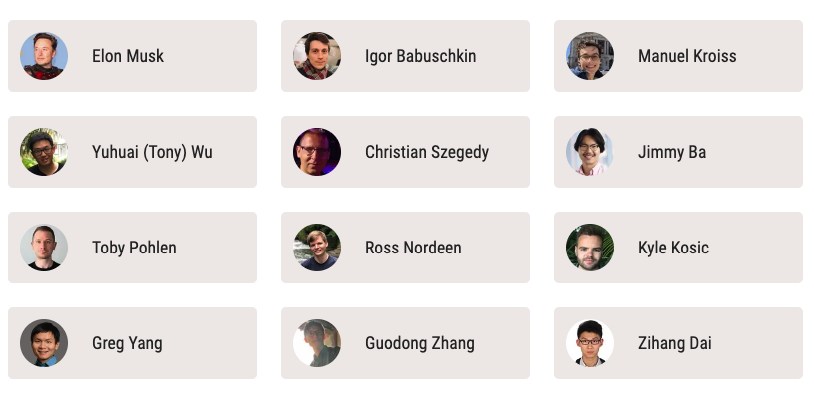
Heading the team Elon Musk has assembled an exceptional group of experts hailing from DeepMind, OpenAI, Google Research, Microsoft Research, Tesla, and the University of Toronto. Drawing on their collective wealth of knowledge and experience, this remarkable team comprises trailblazers who have contributed to some of the most influential advancements in AI. From the development of cutting-edge optimization algorithms like Adam and game-changing methodologies such as adversarial example detection, to groundbreaking projects like AlphaStar and GPT-4, these visionaries have left an indelible mark on the field.
The primary objective of the team is to demystify AI algorithms and bring transparency to their decision-making processes. By making AI systems explainable, xAI seeks to ensure fairness, ethicality, and accountability in their outputs. This pivotal focus on explainability addresses a critical concern in the AI industry and paves the way for responsible and trustworthy adoption of AI technologies.
To provide a platform for direct engagement with the xAI team, a Twitter Spaces chat has been scheduled for Friday, July 14th. This interactive session offers a unique opportunity for individuals to connect with the brilliant minds behind xAI, ask questions, and gain deeper insights into their groundbreaking work. Don’t miss this chance to be part of the conversation and witness firsthand the future of explainable AI.
While operating as an independent entity, the team maintains a collaborative approach, fostering partnerships with X Corp (Twitter), Tesla, and other industry leaders. This collaboration creates an ecosystem of knowledge exchange and resource sharing, propelling the advancement of explainable AI across various sectors.
The launch marks a pivotal moment in the AI landscape, as Elon Musk and his exceptional team embark on a journey to redefine the boundaries of AI transparency and forge a path towards a more understandable and accountable AI future.
Stay tuned for further updates as Gulf Insight 360 continues to bring you the latest developments and in-depth coverage of xAI’s groundbreaking advancements in the field of explainable artificial intelligence.
Team Members of xAI (Explainable Artificial Intelligence) with their Twitter profiles:
Igor Babuschkin – Former Research Scientist at DeepMind.
Manuel Kroiss – Former Researcher at OpenAI.
Yuhuai (Tony) Wu – Researcher at Google Research.
Christian Szegedy – Research Scientist at Google Research.
Jimmy Ba – Former Research Scientist at Google Research.
Toby Pohlen – Researcher at Microsoft Research.
Ross Nordeen – Former Research Engineer at Tesla. Twitter Profile
Kyle Kosic – Former Research Engineer at Tesla. Twitter Profile
Greg Yang – Former Research Engineer at Tesla.
Guodong Zhang – Research Scientist at University of Toronto.
Zihang Dai – Research Scientist at University of Toronto. Twitter Profile
Job Opportunity in xAI (Explainable Artificial Intelligence)
xAI is actively seeking talented engineers and researchers to join their groundbreaking project. If you are passionate about advancing the understanding of the universe and want to be a part of this exciting venture, now is your chance. xAI is currently recruiting experienced individuals to join their team as members of their technical staff in the Bay Area. If you have the expertise and drive to contribute to cutting-edge research and development, this is an opportunity you don’t want to miss. To apply for a position with xAI, please visit their job application form at https://airtable.com/shrtrQqaaoBt4Xm8i. Take the next step in your career and be a part of shaping the future with latest technology.
Disclaimer: This article is based on the latest information available at the time of publication and is subject to updates as new details emerge.