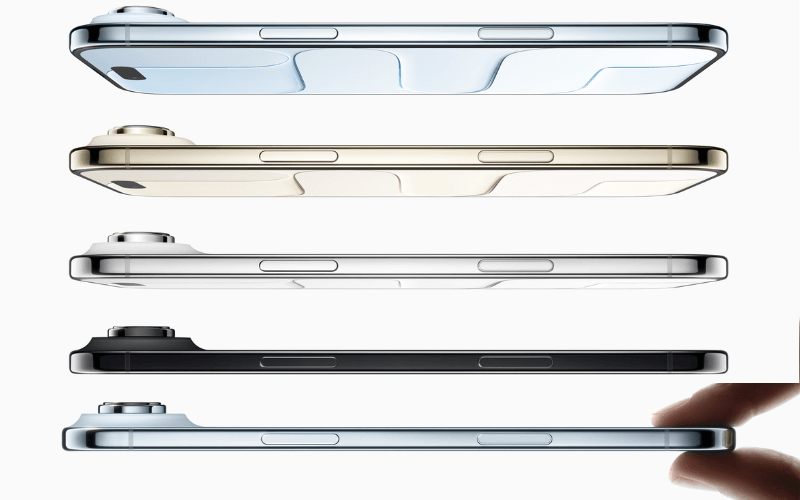
Apple’s patented flexible battery technology redefines smartphone engineering by maximizing energy storage within impossibly thin constraints
While the iPhone Air’s record-breaking 5.6mm thickness has captured headlines, the device’s most significant technological breakthrough lies hidden within its titanium frame: a revolutionary “metal can battery” design that increases energy storage by up to 20% compared to previous thin models, fundamentally challenging the physics of mobile power management.
Apple’s engineering team has achieved what industry experts considered impossible — delivering all-day battery life in the thinnest iPhone ever created. Apple’s slimmest iPhone uses a “revolutionary” battery design that allows the cell to fill more space within the device, boosting overall energy storage while maintaining the structural integrity and thermal management required for sustained performance.
The breakthrough represents years of materials science research and manufacturing innovation that could reshape how the entire smartphone industry approaches the fundamental trade-off between device thickness and battery capacity.
Table of Contents
Revolutionary Metal Can Battery Technology
The iPhone Air’s notched design is made possible by a technology Apple has patented called a metal can battery, representing the most significant advancement in smartphone battery engineering since lithium-ion technology became standard in mobile devices.
Unlike traditional rectangular battery cells that waste significant internal space due to rigid packaging constraints, Apple’s metal can battery utilizes flexible casing technology that conforms to the available internal volume within the iPhone Air’s ultra-thin frame. This approach maximizes energy density while accommodating the complex three-dimensional geometry required for 5.6mm thickness.
The flexible battery design allows the power cell to wrap around internal components, fill irregular spaces, and adapt to the thermal management requirements that become critical in ultra-thin devices. This represents a fundamental departure from conventional battery design that has constrained smartphone form factors for over a decade.
The metal can construction provides superior structural support compared to traditional pouch batteries, enabling the ultra-thin design while maintaining battery safety and longevity standards. This dual benefit addresses both engineering and consumer concerns about durability in extremely thin devices.
Engineering the Impossible: 20% Power Increase
This design, as detailed in a recent TechCrunch analysis, increases energy storage by up to 20% compared to previous thin models, enabling longer usage times for demanding tasks like video streaming and AI processing, representing a breakthrough that defies conventional expectations about battery capacity constraints.
The 20% improvement translates to meaningful real-world usage extensions that address consumer concerns about battery life in thin devices. Traditional ultra-thin smartphones have historically required significant battery capacity sacrifices, but the iPhone Air’s flexible battery technology eliminates this compromise.
The energy density improvements enable the iPhone Air to support power-intensive features including the A19 Pro chip’s computational demands, ProMotion display technology, and advanced camera systems without the performance throttling that typically affects thin devices when batteries drain.
The achievement is particularly remarkable considering that the internal design of iPhone Air was completely rethought in order to maximize battery space, requiring revolutionary approaches to component placement, thermal management, and structural engineering.
Power Efficiency Revolution: C1X Modem Integration
Beyond revolutionary battery design, the iPhone Air achieves exceptional power efficiency through Apple’s new C1X modem, making iPhone Air the most power-efficient iPhone ever made while delivering 5G connectivity performance that rivals thicker devices.
The C1X modem represents Apple’s continued vertical integration strategy, providing power consumption optimizations specifically designed for ultra-thin device constraints. Traditional modems require significant power for 5G operations, but Apple’s custom silicon delivers comparable performance while extending battery life.
The modem integration works synergistically with the flexible battery design, enabling sustained high-performance operation without the thermal buildup that typically forces performance throttling in thin devices. This combination addresses both power capacity and power efficiency simultaneously.
The CPU alone is up to 40 percent faster than the chip in iPhone 14 Pro, yet the iPhone Air maintains all-day battery life through the combination of efficient silicon design and revolutionary battery technology that maximizes available energy storage.
Thermal Management Innovation
The flexible battery design provides unexpected benefits for thermal management in ultra-thin devices, where heat dissipation typically becomes a critical constraint on performance and battery life. The metal can construction enables better heat distribution across the device’s internal structure.
Traditional rectangular batteries create heat concentration points that can trigger thermal throttling in thin devices. The iPhone Air’s flexible battery distributes heat generation across a larger internal surface area, enabling sustained performance while protecting battery longevity.
The thermal benefits extend to charging performance, allowing faster charging speeds without the thermal limitations that typically slow charging in thin devices. This addresses a common consumer complaint about ultra-thin smartphones requiring frequent charging with slow charging speeds.
The integrated thermal management approach ensures that the iPhone Air can maintain peak A19 Pro performance during extended usage scenarios that would cause performance throttling in conventional thin smartphone designs.
Manufacturing Breakthrough and Production Challenges
Producing flexible metal can batteries at iPhone-scale volumes required breakthrough manufacturing technologies and quality control systems that push the boundaries of current battery production capabilities.
The flexible battery manufacturing process involves precision forming techniques that maintain consistent energy density while accommodating complex three-dimensional shapes. This represents a significant advancement from traditional rectangular battery assembly lines.
Quality control for flexible batteries requires new testing methodologies to ensure safety and performance across the varied geometries possible with the flexible design. Apple’s manufacturing partners have developed specialized equipment and processes specifically for this revolutionary battery technology.
The production complexity partially explains the iPhone Air’s $999 pricing, as the flexible battery technology requires significantly more sophisticated manufacturing processes compared to traditional smartphone batteries.
Industry Implications and Competitive Response
Apple’s battery breakthrough could force the entire smartphone industry to reconsider fundamental assumptions about the trade-offs between device thickness and battery life, potentially accelerating development of similar flexible battery technologies across competing devices.
Samsung, Google, and other smartphone manufacturers have historically avoided ultra-thin designs due to battery capacity constraints. Apple’s demonstration that 20% power increases are possible in 5.6mm devices may prompt competitive responses and technology licensing discussions.
The flexible battery approach has applications beyond smartphones, potentially influencing tablet, laptop, and wearable device design as manufacturers seek to maximize battery capacity within increasingly thin form factors.
Traditional battery manufacturers face pressure to develop competing flexible battery technologies or risk losing market share to suppliers capable of producing Apple’s metal can battery designs at scale.
Real-World Performance Impact
The 20% battery capacity increase translates to measurable improvements in common usage scenarios that address consumer concerns about ultra-thin device practicality:
Video Streaming: Extended viewing times for Netflix, YouTube, and other streaming services without mid-day charging requirements Photography and Videography: Sustained camera performance for extended photo sessions and 4K video recording Gaming: Longer gaming sessions with consistent performance without thermal throttling Productivity: All-day professional usage including video calls, document editing, and multitasking
The improvements are particularly noticeable during power-intensive AI processing tasks that leverage the A19 Pro’s neural engine capabilities, ensuring responsive performance throughout extended usage periods.
Future Battery Technology Evolution
The iPhone Air’s flexible battery success establishes a foundation for future innovations in smartphone power management, potentially leading to even more dramatic improvements in energy density and form factor flexibility.
Future iterations could incorporate additional technologies including solid-state electrolytes, advanced thermal management materials, and further miniaturization of power management components to achieve even greater energy density improvements.
The metal can battery approach provides a scalable platform for battery capacity increases as energy density technologies continue advancing, potentially enabling future ultra-thin devices with battery life exceeding current thick smartphones.
Research into flexible battery applications beyond smartphones could influence Apple’s broader product portfolio, from MacBook Air designs to future AR/VR devices where weight and thickness constraints are critical.
Consumer Adoption and Market Reception
Early reviews and user reports suggest that the iPhone Air’s battery performance addresses the primary concern consumers express about ultra-thin smartphones: whether dramatic thickness reduction compromises practical usability.
The combination of 20% increased capacity and improved power efficiency appears to deliver battery life comparable to standard-thickness iPhones, eliminating the compromise that has historically limited ultra-thin device adoption.
Consumer acceptance of the $999 price point will partly depend on whether users value the aesthetic and portability benefits enough to justify premium pricing for breakthrough battery technology.
The successful demonstration of all-day battery life in a 5.6mm device could accelerate consumer interest in ultra-thin smartphones, potentially creating a new premium category within the smartphone market.
Technical Challenges and Limitations
Despite the revolutionary achievements, flexible battery technology faces ongoing challenges including long-term durability, repair complexity, and potential safety considerations unique to non-rectangular battery designs.
Flexible batteries require different safety testing protocols to ensure protection against puncture, thermal runaway, and mechanical stress across varied geometric configurations. Apple’s safety validation process has required extensive testing beyond traditional battery safety standards.
Repair and replacement of flexible batteries presents unique challenges for service providers, potentially requiring specialized tools and training to maintain the iPhone Air’s ultra-thin design during battery service procedures.
The complex three-dimensional battery geometry makes capacity degradation assessment more complicated, potentially affecting battery health monitoring and replacement timing decisions.
Environmental Impact and Sustainability
The flexible battery design enables more efficient use of materials by maximizing energy storage per unit of battery material, potentially reducing the environmental impact per unit of energy capacity compared to traditional rectangular designs.
However, the complex manufacturing processes and specialized materials required for metal can batteries may increase production environmental impact, requiring lifecycle analysis to determine overall sustainability benefits.
Battery recycling processes may need adaptation to handle the flexible battery materials and construction, ensuring that the environmental benefits of improved energy density don’t create recycling challenges.
Apple’s commitment to carbon neutrality includes considerations for battery technology environmental impact throughout the product lifecycle, from materials sourcing through end-of-life recycling.
Looking Forward: The Future of Thin Computing
The iPhone Air’s battery breakthrough represents more than smartphone innovation — it demonstrates that fundamental engineering constraints can be overcome through materials science advances and manufacturing innovation.
The success of flexible battery technology in achieving 20% power increases within 5.6mm thickness suggests that future computing devices could achieve unprecedented combinations of portability and performance previously considered impossible.
The engineering principles developed for the iPhone Air’s battery could influence broader technology categories, from ultra-thin laptops to advanced wearable devices where power management within space constraints represents critical design challenges.
As battery technology continues evolving, the iPhone Air’s flexible battery approach provides a proven foundation for future innovations that could further expand the possibilities for thin, powerful computing devices.
Conclusion: Redefining Power Management Possibilities
The iPhone Air’s revolutionary metal can battery represents the most significant breakthrough in smartphone power management in over a decade, demonstrating that fundamental trade-offs between device thickness and battery capacity can be overcome through innovative engineering and materials science.
The 20% energy storage increase within a 5.6mm frame challenges industry assumptions while providing practical benefits that address real consumer needs for all-day battery life without thickness compromises.
The flexible battery technology establishes Apple’s leadership in advanced power management while potentially influencing the entire smartphone industry to reconsider approaches to ultra-thin device design.
Beyond immediate product benefits, the iPhone Air’s battery innovation demonstrates the continuing potential for fundamental engineering breakthroughs that expand possibilities for mobile computing form factors and performance capabilities.
The success of this revolutionary battery technology suggests that the future of mobile devices may be defined not by compromises between performance and portability, but by innovative solutions that deliver both without sacrifice.
Leave a Reply